Most advice on shortening sales cycles adds activity: more follow-ups, more urgency, more pressure near the close. That misdiagnoses the problem.
Deals often stall in gaps sellers can control: between interest and the first conversation, a booked call and the meeting, or a champion and the buying committee. Buyers are tired, and outbound channels are returning less for every push. Focus on the handoffs that keep interested buyers waiting. To improve deal velocity in 2026, find where time leaks from your process before adding another sequence.
In 2023, 43% of 322 surveyed B2B sales leaders worldwide said their sales-cycle timeline had increased over the previous 12 months, while 16% said it had decreased, according to RAIN Group research reported by MarketingProfs.
The eight strategies below each remove one specific delay, so diagnose your stall point first, then pick the matching tactic and measure that interval weekly. A first-response delay calls for a different fix than a missed meeting or slow stakeholder approval. Track the interval your chosen tactic targets, and judge it by whether that handoff moves faster.
Table of Contents
- 1. Real-Time Speed-to-Lead Engagement
- 2. Instant In-Browser Video Conversations on High-Intent Pages
- 3. 24/7 AI-Assisted Qualification and Routing
- 4. Visitor Identification and Intent-Based ABM Prioritization
- 5. Frictionless One-Click Scheduling with Automated Reminders
- 6. Co-Browsing and Interactive Product Demonstrations
- 7. Early Multithreading Across the Buying Committee
- 8. Mutual Action Plans with Buyer-Agreed Timelines
- How the Six Strategies Compare by Stage, Metric, and Trade-off
- Start With the Slowest Handoff in Your Funnel
1. Real-Time Speed-to-Lead Engagement
A pricing page visit at 10:04 a.m. doesn’t stay hot until tomorrow’s follow-up block. By then the buyer has booked with a competitor, moved to another task, or lost the internal moment that prompted the visit.
The 2011 Harvard Business Review study of 2,241 U.S. companies found that among companies that responded within 30 days, the average response time was 42 hours, only 37% replied within one hour, and companies contacting a lead within one hour were nearly seven times more likely to qualify that lead than companies waiting an additional hour. Speed isn’t politeness. It’s qualification probability.

Where This Removes Time
This removes the first-response stall. Say a B2B SaaS team routes pricing visitors to an available AE within minutes using live chat or video, instead of a form-to-email sequence. Slack or Teams alerts notify the assigned rep the moment a target account arrives, with page, company, and territory context attached.
- Set a visible target: Under five minutes for high-intent pages, reviewed weekly by rep and page.
- Route before you alert: Match by territory, account tier, and live availability so the right person answers first.
- Reserve speed for intent: Apply the fastest path to pricing and demo pages, not every blog visit.
That discipline is the core of fixing a slow lead response time, and the same logic drives call center conversion advice from Recepta.ai. Don’t staff for instant response everywhere. Staff for it where intent is proven, and let automation cover the rest.
2. Instant In-Browser Video Conversations on High-Intent Pages
Forms ask a buyer to trade contact details for a promise. A live invitation on the page they’re already reading asks for a conversation now. Those aren’t equivalent offers, and buyers know it.
Gartner’s B2B buying journey research reports that 75% of B2B buyers prefer a rep-free sales experience, yet buyers are 1.8 times more likely to complete a high-quality deal when they use supplier-provided digital tools in partnership with a sales representative rather than independently. You need both modes in one flow. Let the buyer browse alone, then make expert help one click away at the moment of doubt.
A Worked Example
Say a software company puts a talk to an expert now option on its pricing page. A visitor comparing tiers clicks, joins a browser call with no download, and an SDR answers the licensing question, qualifies fit, and books a technical demo in the same session. That one session replaces a form, an email, a scheduling thread, and a cold discovery call.
Video works when it’s an exit from confusion, not an interruption of reading. Trigger it on pricing, comparison, product, and integrations pages. Keep it off early blog posts.
Open with what the visitor is viewing, not a generic pitch. Offer chat or scheduling if they decline video, so a no to video isn’t a no to you. Review recordings weekly and move triggers earlier or later based on acceptance and qualification rates, not opinions.
3. 24/7 AI-Assisted Qualification and Routing
Your buyers don’t research only during your working hours. An overseas prospect evaluating at 2 p.m. their time hits your empty office at 3 a.m. yours, and an unanswered high-intent visit is pipeline you’ll never see in a report.
AI chat fixes the off-hours stall if you scope it tightly. It should answer common questions, ask four to six qualification questions, and either book a meeting or hand a hot prospect to a live rep with a clear promise of when that rep will follow up. It shouldn’t try to run discovery, negotiate, or bluff through technical depth it doesn’t have.
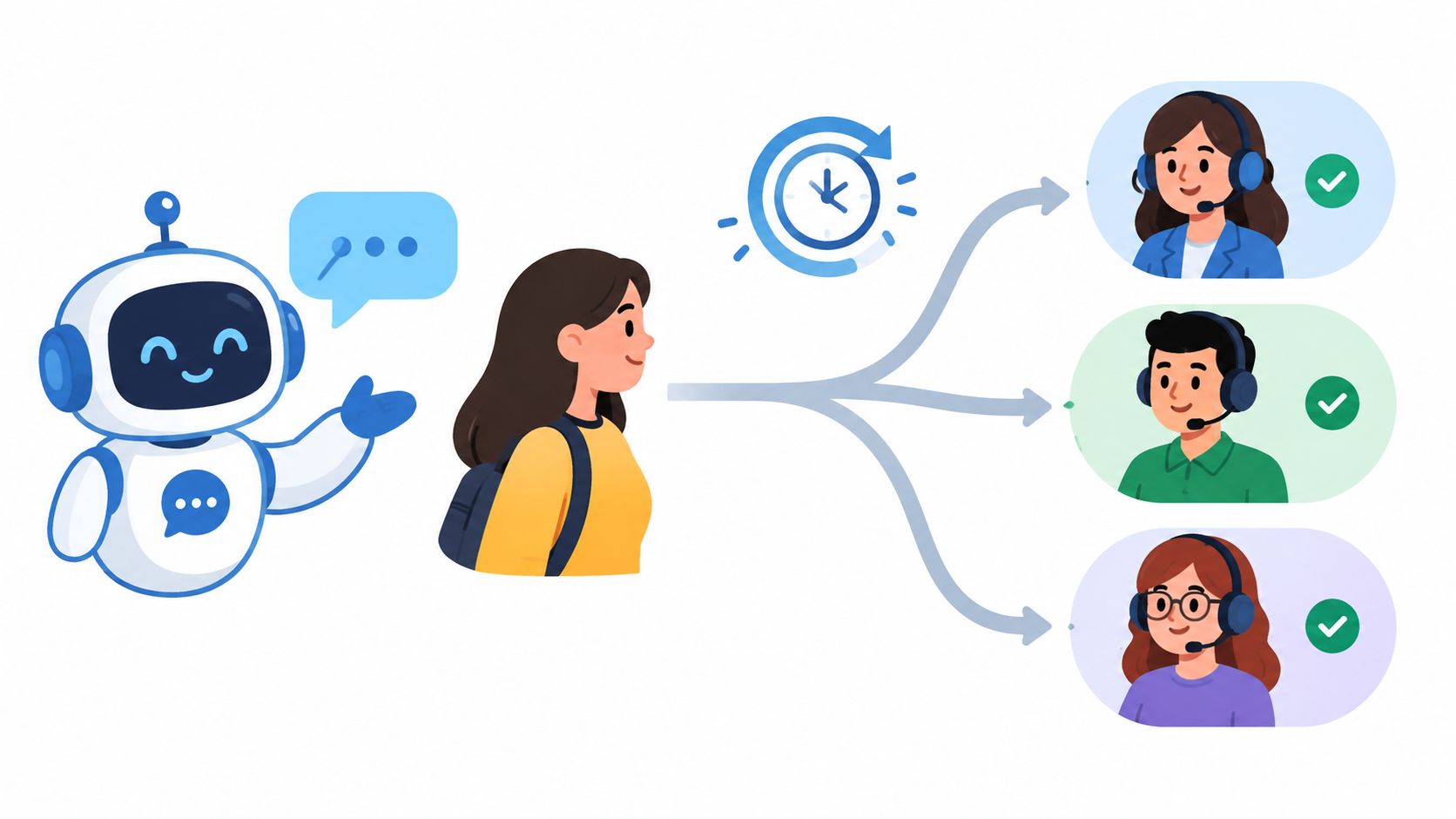
Say AI chat books meetings for overseas prospects during their business day, so your US team starts the morning with qualified calls already on calendars, complete with use case and timeline. The same flow filters students and job seekers out while routing enterprise accounts straight to AEs.
Controls That Keep It Useful
- Make escape easy: Let visitors skip questions or reach a human without restarting.
- Steal the first-call questions: Collect team size, current tool, and timeline so the rep call starts productively.
- Review transcripts weekly: Fix dead-end answers before they cost you more visits.
Done well, an AI sales assistant doesn’t replace people. It protects the hours when people aren’t there and makes their first conversation count.
4. Visitor Identification and Intent-Based ABM Prioritization
Anonymous traffic forces a bad choice. Chase everyone and you burn reps on noise. Chase no one until a form fills and you miss accounts that are evaluating you right now without raising a hand.
Identification plus intent scoring removes the prioritization stall. Company identity alone is weak. A target account that viewed a blog post once isn’t in-market. A Tier 1 account with repeat pricing views from two people in one week is telling you something different, and that distinction is how you identify meaningful B2B buying signals.
How to Set Thresholds
Start with a defined, tiered target account list before you turn on broad alerts. Alert the assigned AE when a Tier 1 company hits pricing twice in a week or when a second visitor from the same account views product pages. Send lower tiers into a prioritized outbound queue instead of a real-time alert.
- Combine fit and behavior: Firmographic fit without behavior is a wish list. Behavior without fit is noise.
- Limit alert volume: If reps get fifty alerts a day, they’ll ignore all fifty within a month.
- Document data use: Record how identification data is collected and used so you stay compliant with GDPR and CCPA.
The trade-off is coverage versus credibility. I’d rather reps trust five alerts a week and act on all five than distrust fifty. Tight thresholds shorten sales cycles because reps start conversations while accounts are evaluating, with context about what those accounts viewed.
5. Frictionless One-Click Scheduling with Automated Reminders
Every scheduling email is a day added and a chance to drop out. You propose Tuesday, they reply Thursday, you confirm Friday for next week. The buyer didn’t slow the deal. Your calendar process did.
Let fit prospects book directly into the right rep’s calendar at the moment of interest, then protect that booking. We deliver 60% fewer no-shows through one-click scheduling and instant reminders, and that pattern holds for a simple reason. The meeting lands on both calendars immediately, while intent is still warm, instead of after a thread.
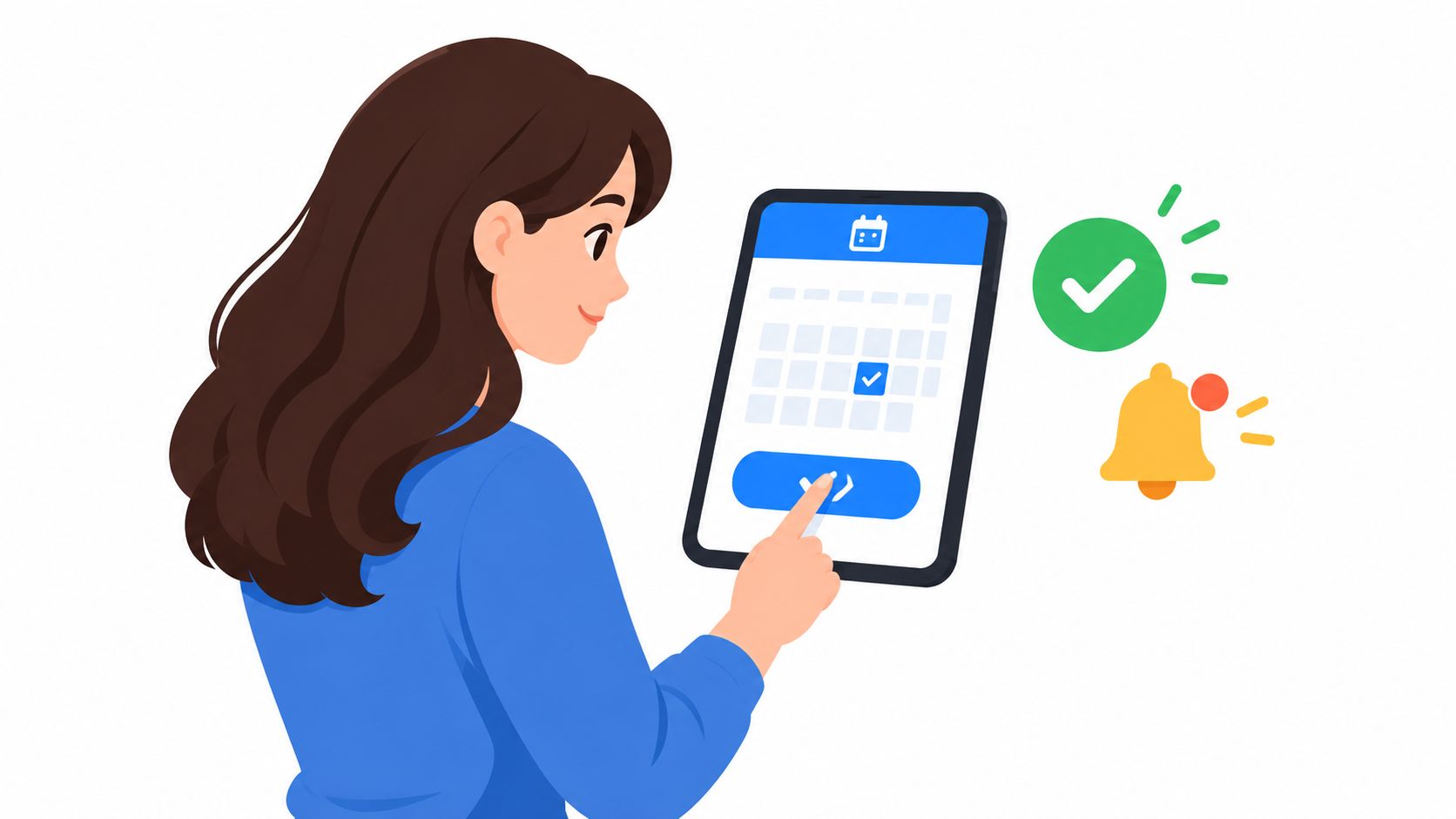
Say a chat conversation qualifies a visitor with three questions, shows only the appropriate AE’s availability, and books the demo. Confirmation goes out instantly with an agenda and one prep question. Reminders follow 24 hours and 1 hour before, by email and SMS where the prospect opted in.
booking rule: Qualify before you reveal the calendar, or route the booking after it. An unguarded calendar trades cycle time for unqualified meetings, and that’s a bad trade.
Include a reschedule link in every reminder. A prospect who can’t make Tuesday and can move the meeting in one click rebooks. A prospect who has to email you to reschedule often just doesn’t show. Measure time from first engagement to meeting held, not meetings booked, so no-shows can’t hide inside a vanity metric.
6. Co-Browsing and Interactive Product Demonstrations
Sending a link and hoping is not a demo strategy. Neither is a rigid 45-minute script that answers the questions you wish the buyer had. Both add rounds, because every unanswered question becomes another meeting.
Co-browsing removes the demo-loop stall. Our co-browsing lets a rep guide buyers through the product live in their browser, with no downloads, while the prospect stays in control of their own session. The rep tailors the path to the workflow on screen, and objections surface while you can still address them.
A Practical Session
Say an AE co-browses a pricing configurator with a procurement lead, adjusting seats and tiers live and answering licensing questions on the spot. That session can cut an internal review round where procurement would otherwise screenshot, email questions, and wait. For a technical evaluator, record the walkthrough and send it to the economic buyer with a short summary, so the next meeting is a working session, not a repeat demo.
Build a standard path by persona, for marketing, RevOps, or IT, then adapt it live. Ask the prospect to drive navigation at least once, because buyers who click through their own use case retain and defend it better internally. Mask sensitive fields before sharing, and send a summary with agreed next steps within the hour. If you need the mechanics first, how screen sharing works covers the setup without downloads or plug-ins.
7. Early Multithreading Across the Buying Committee
A fast first meeting with the wrong single person doesn’t shorten a cycle. It creates a deal that moves quickly until it hits finance, security, or an executive sponsor who has never heard of you, then stops completely.
A Gartner sales survey found that 74% of B2B buying teams experienced unhealthy conflict during the decision process, and teams that reached consensus were 2.5 times more likely to report a high-quality deal. Your job isn’t just to win a champion. It’s to engineer consensus before conflict hardens.
Map Coverage, Not Just Contacts
In the first two meetings, name the economic buyer, technical evaluator, end users, and approvers, and track each one as engaged, aware, or missing in the CRM. Ask your champion directly who else needs to approve and how that approval really runs.
Say an enterprise AE runs a technical deep-dive with IT and a pricing discussion with finance in parallel during week two. Those threads surface a security requirement and a budget ceiling early, when both are workable, instead of in the final approval week.
Tailor evidence by role, ROI for finance, security for IT, workflow for users, and give your champion material written for the group, not just for them. The metric that matters here is time from first engagement to documented consensus, not meeting count.
8. Mutual Action Plans with Buyer-Agreed Timelines
Deals don’t only stall before the demo. For enterprise buyers, the longest stretch often comes after it, in security review, legal, procurement, and budget approval that nobody scheduled because everyone assumed evaluation was the hard part.
A mutual action plan removes the post-demo approval stall. It’s a shared list of milestones, owners, and target dates that both sides agree to, built from the buyer’s go-live date working backward, not from your quarter-end working forward. If the dates don’t fit, you learn that in week two instead of week ten.
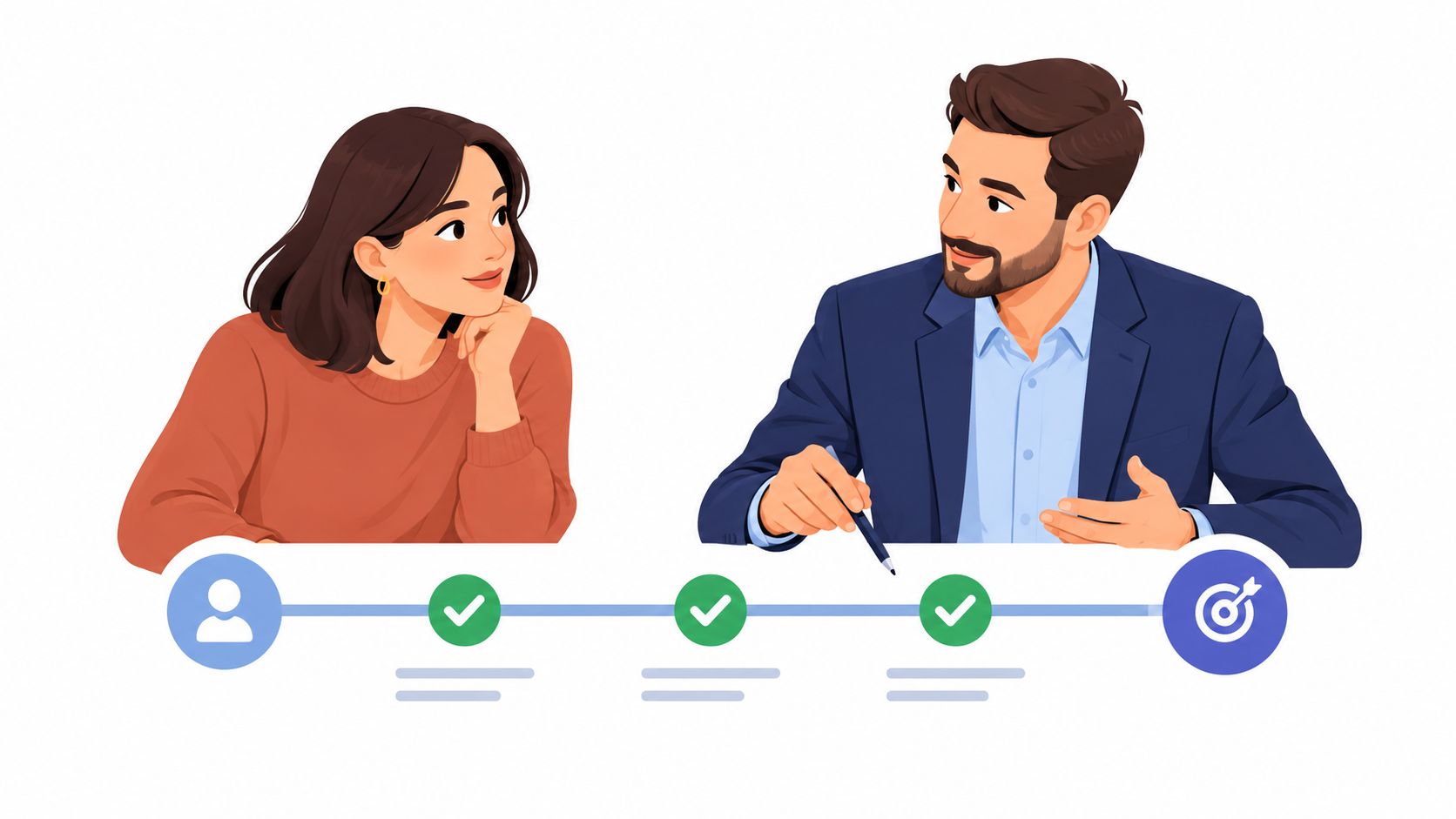
Say an AE builds the plan in the second meeting, with dated steps for security review, a pilot, legal redlines, and signature, each with a named owner on the buyer’s side. Security documentation goes out the same week, not after the verbal yes. That early approval readiness is where weeks come back.
- Include the slow steps early: Put legal, security, and procurement in the first draft, even with rough dates.
- Review it every meeting: Update slipped dates openly and reset owners, or the plan becomes decoration.
- Pair it with MEDDPICC: Use qualification to confirm decision criteria, paper process, and champion before you forecast.
A plan the buyer helped build gives your champion a tool to drive internal momentum without you in the room. A plan you built alone is just your forecast with better formatting.
How the Six Strategies Compare by Stage, Metric, and Trade-off
| Item | Stage It Shortens | Primary Metric to Track | Best For | Main Trade-off |
|---|---|---|---|---|
| Real-Time Speed-to-Lead Engagement | Interest to first sales interaction | Response time and time to first meeting | High-intent inbound leads | Requires fast coverage and relevant outreach |
| Instant In-Browser Video Conversations on High-Intent Pages | Page visit to live conversation | Visitor-to-conversation conversion | Buyers evaluating pricing or product pages | Rep availability and interruption risk |
| 24/7 AI-Assisted Qualification and Routing | Initial inquiry to qualification and routing | Qualified meetings booked | Off-hours and global inbound demand | Poor bot experiences can damage trust |
| Visitor Identification and Intent-Based ABM Prioritization | Anonymous visit to prioritized account outreach | Engagement from identified target accounts | ABM teams prioritizing in-market accounts | Identification may be inaccurate and raises privacy obligations |
| Frictionless One-Click Scheduling with Automated Reminders | Interest to booked and attended meeting | Time to meeting and meeting show rate | Prospects ready to speak with sales | Unqualified bookings and scheduling edge cases |
| Co-Browsing and Interactive Product Demonstrations | Product evaluation to addressed questions | Demo-to-next-step progression | Buyers needing tailored product walkthroughs | Requires preparation and safeguards for sensitive data |
| Early Multithreading Across the Buying Committee | Evaluation to stakeholder alignment and approval | Buying committee coverage | Complex deals with multiple decision-makers | Requires coordination and can overwhelm buyers |
| Mutual Action Plans with Buyer-Agreed Timelines | Evaluation to decision and close | Milestone progress against agreed dates | Complex or procurement-heavy deals | Requires buyer agreement and ongoing updates |
Start With the Slowest Handoff in Your Funnel
Don’t adopt all eight strategies at once. You’ll change too many variables, learn nothing clean, and exhaust the team. Pick the one interval that’s measurably worst today and fix that handoff first.
Start by pulling four intervals from your CRM for the last quarter. Measure interest to first response, first response to meeting booked, meeting booked to meeting held, and first meeting to documented next step with a second stakeholder. One of those will be embarrassingly long. That’s your starting point, regardless of which tactic sounds most exciting.
If buyers wait hours for a reply, start with speed-to-lead and off-hours coverage. Captiwate’s AI Chat responds to visitors in under a minute and can book the demo itself, so the first conversation happens while interest is still high. If meetings book but don’t happen, fix scheduling, reminders, and reschedule links before you spend on more traffic. If demos go well and deals still drag, your problem is later, in consensus and approval, and multithreading plus a mutual action plan will do more than another point of response speed ever will.
There’s a useful benchmark for judging whether process work is paying off. McKinsey’s research on B2B sales organizations found that redesigning the buying process around how customers really purchase could accelerate the time between lead qualification and deal close by as much as 20%, increase customer leads by as much as 20%, and grow first-time customers by 10%. Treat that as a reasonableness check. If your redesign isn’t moving stage duration at all within a quarter, you fixed activity, not friction.
Review response times, meeting hold rates, and stakeholder coverage every week in the same meeting where you review pipeline. Shortening sales cycles isn’t a project with an end date. It’s the discipline of finding the current slowest handoff, removing the wait inside it, and then moving to the next one. The teams that sustain it don’t sell harder. They leave fewer gaps for deals to die in.
If your biggest gap is between a high-intent visit and a live conversation, Captiwate connects those visitors to your reps through in-browser video and AI chat, qualifies them, and books the meeting without a form-and-wait step. See how it works on your own traffic at Captiwate.