Many teams start with the wrong question: “Which lead qualification tool has the best scoring?” Scoring is only one part of the workflow, and it often happens after the most valuable moment has passed. The right choice depends on where qualification breaks: do you need live engagement or post-submit routing, are you qualifying an individual lead or an entire account, how much intent data do you really need, which CRM must remain the system of record, and does your budget favor traffic, usage, credits, or sales-led pricing?
Response speed makes that decision practical. An analysis of 2,241 U.S. companies found that contacting leads within 5 minutes made firms 21 times more likely to qualify those leads than waiting 30 minutes, while waiting 24 hours or more made qualification 60 times less likely (LeanData’s speed-to-lead analysis). A tool that produces an excellent score after the buyer has moved on may be less useful than a simpler system that starts the right conversation immediately.
This comparison groups each lead qualification tool by the bottleneck it solves: real-time conversation, routing, enrichment, account intent, or predictive scoring. The list starts with immediate website conversion and moves toward deeper account intelligence. For the broader mechanics behind qualification and pipeline stages, see this guide to lead qualification models for pipeline.
Table of Contents
- 1. Captiwate
- 2. Qualified
- 3. Chili Piper
- 4. Salesloft Chat Agents
- 5. 6sense
- 6. Demandbase
- 7. ZoomInfo FormComplete and Enrich
- 8. Clearbit by HubSpot
- 9. Leadfeeder
- 10. HG Insights Revenue Growth Intelligence
- Top 10 Lead Qualification Tools Comparison
- Choose the Qualification Layer You Actually Need
1. Captiwate
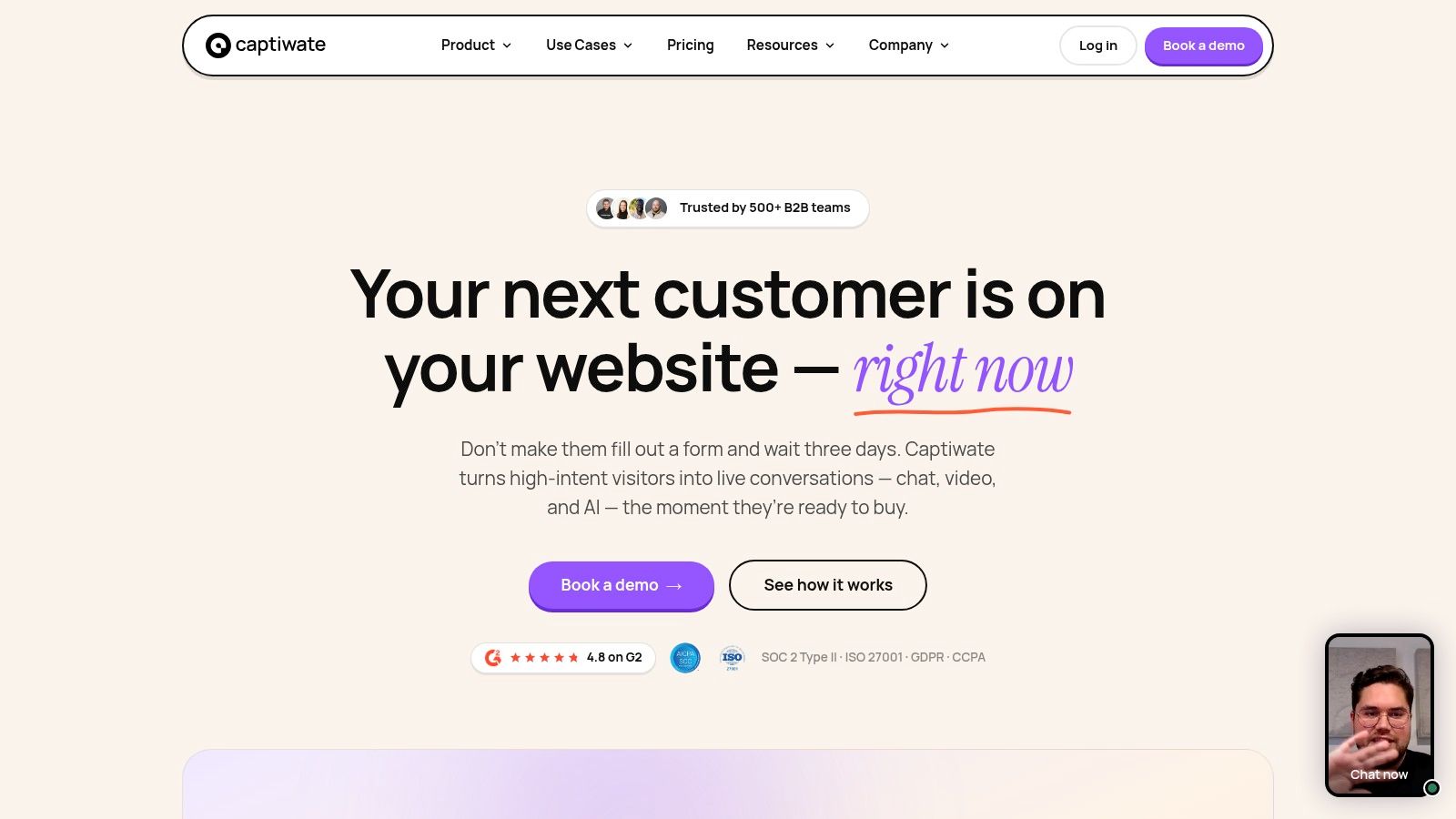
Captiwate addresses a specific qualification bottleneck: website visitors showing intent before they submit a form or request a meeting. It can start an in-browser conversation through video, chat, or co-browsing when visitor behavior signals active interest. That gives sales a chance to respond during the buying moment instead of waiting for a lead record to enter a queue.
The platform combines visitor identification, behavioral intent detection, AI qualification, routing, and scheduling. For example, a returning visitor on a pricing page can receive relevant questions, then move to the appropriate seller or a synchronized calendar. Connections with HubSpot, Salesforce, and Pipedrive keep conversations, meetings, identified accounts, and intent signals in the existing operating system rather than a separate qualification silo.
Where Captiwate fits best
Captiwate suits B2B inbound teams, SDR organizations, ABM and PLG marketers, RevOps leaders, founders, and customer success teams that need to act while intent is visible. Setup is relatively light: a single JavaScript snippet is designed for same-day deployment. Enterprise buyers still need to review SOC 2 Type II, ISO 27001, GDPR and CCPA alignment, SSO/SAML, and custom data residency during security and procurement checks.
The pricing model follows monthly website traffic, starting at $15,000 per year for up to 20,000 monthly visitors (Captiwate pricing). Seats and calls are not the primary scaling variables, which may make costs easier to forecast than a credit-based enrichment system. High-traffic sites should calculate the cost per qualified conversation before choosing it.
The implementation decision is also a workflow decision. Define which pages trigger AI, which answers qualify a visitor, which rep receives the conversation, and what happens outside business hours before installing the tool.
Captiwate is most useful between automated qualification and the first live conversation. Its AI can cover off-hours demand, while live video and one-click scheduling give qualified prospects a direct route to sales. Teams looking for account enrichment or predictive scoring should choose a different layer, or connect Captiwate to one that already handles those jobs.
2. Qualified
Qualified is built for companies that want an AI SDR on high-intent website traffic, especially when Salesforce is central to reporting, ownership, and revenue attribution. Its Piper AI SDR can greet visitors, ask qualifying questions, enrich records, route conversations, and book meetings. It supports chat, voice, and video engagement, so teams can choose a conversational format rather than forcing every buyer through a static form.
The strongest case for Qualified is operational alignment. Behavioral and account-based targeting can determine where the agent appears, while routing logic can pass the interaction to the right seller. Salesforce-native reporting matters for enterprise teams that need website conversations tied to opportunity records, campaign influence, and seller activity.
The Salesforce trade-off
Qualified is best when your CRM and marketing data are already reasonably organized. If account ownership, territories, lifecycle stages, or campaign fields are inconsistent, the platform won’t fix those problems by itself. It may expose them faster, because real-time qualification forces the team to make routing decisions that a delayed queue can hide.
Pricing is sales-led and not publicly listed, so buyers should expect a discovery process rather than a self-serve comparison. Implementation effort also rises with the number of Salesforce objects, brands, regions, and handoff paths involved. Teams already invested in Salesforce and enterprise GTM governance will likely get more value than a small company looking for a lightweight chat widget.
For teams comparing conversational qualification with passive scoring, this practical guide to AI lead qualification is a useful companion. Qualified’s advantage isn’t just that it asks questions. It connects those answers to the seller workflow where follow-up, attribution, and pipeline inspection already happen.
3. Chili Piper
Chili Piper solves a narrower and very common bottleneck: the delay between form completion and a real sales handoff. Its Concierge experience can qualify a visitor at form submit, apply ownership or territory rules, and place the prospect directly on an appropriate rep’s calendar. Teams can also use instant phone connects when a live call is more valuable than scheduling.
That focus makes Chili Piper easier to evaluate than a broad predictive platform. It doesn’t need to become the entire intelligence layer for your go-to-market motion. It needs clean form data, reliable CRM ownership, working calendars, and routing rules that reflect how your sales team really operates.
What works in practice
Round-robin, named ownership, territory, and Salesforce-object routing support more complex handoffs than a simple calendar link. Bot-driven qualification can collect the minimum information needed before booking, while spam checks and analytics help protect rep capacity. A JavaScript snippet keeps implementation relatively quick on the pages that matter most.
The main limitation is organizational, not cosmetic. If ownership records are stale or territories overlap, instant routing delivers the wrong lead faster. The same applies to SDR-to-AE handoffs. Chili Piper can reduce leakage, but your team still has to define when an SDR should qualify, when an AE should receive the meeting, and what happens when the buyer doesn’t match a standard path.
AI enrichment and bot functionality use a credit-based system, so RevOps should monitor consumption rather than treating it as an unlimited utility. Chili Piper is a strong fit for demand generation teams with meaningful form volume, clean CRM governance, and a clear preference for form-to-meeting conversion over open-ended website conversation.
4. Salesloft Chat Agents
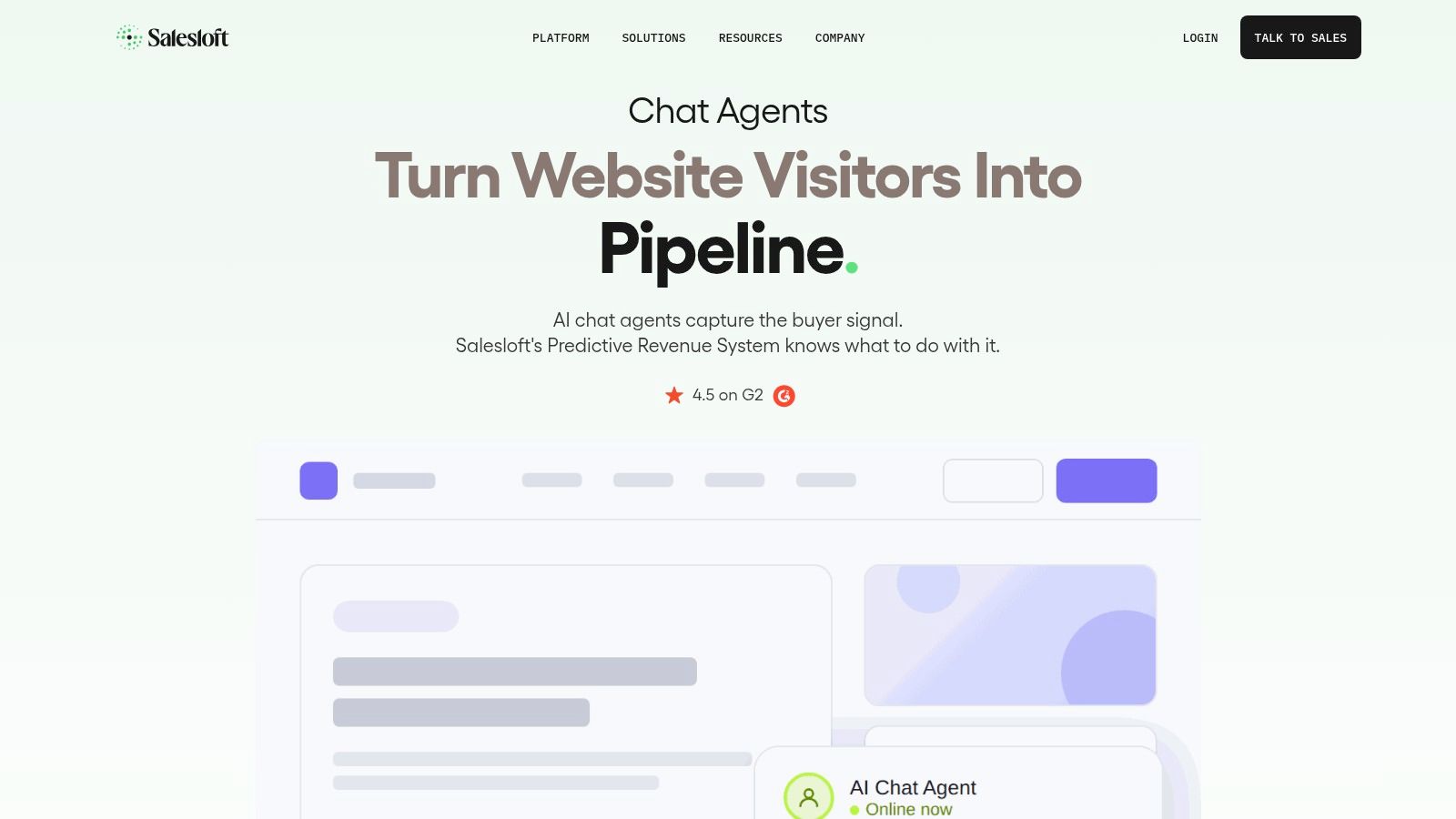
Salesloft Chat Agents, evolved from Drift’s conversational capability, makes sense when qualification must flow directly into an existing Salesloft seller workflow. Its AI agents can engage visitors, answer questions, collect buyer signals, and trigger actions inside the broader Salesloft revenue platform. The value isn’t just the conversation. It’s the connection between that conversation and the cadence, task, or seller action that follows.
This is a consolidation choice. Teams already using Salesloft may prefer one governed platform over a standalone chat product that requires another integration, another data model, and another admin surface. CRM context and previous conversations can support more relevant interactions, while Salesloft workflows provide the follow-up mechanism after a visitor leaves the site.
When consolidation is worth it
The product is most attractive for enterprise sales organizations that already use Salesloft’s wider capabilities, including Cadence and Rhythm. Governance, support, and permissions matter more in that environment than a low-friction launch. The qualification agent should be reviewed alongside existing sequence rules, suppression logic, ownership fields, and escalation paths.
The limitation is strategic fit. If Salesloft isn’t already central to your sales process, buying Chat Agents as a standalone answer may create unnecessary platform dependence. Pricing is quote-based and tied to the broader Salesloft commercial model, so smaller teams should compare the cost of consolidation with a focused conversational tool.
A useful pilot should follow one path from website engagement to seller action. Check whether the agent captures the right signal, whether Salesloft creates the right next step, and whether reps trust the context they receive. If that chain works, Salesloft Chat Agents can reduce tool sprawl. If it doesn’t, the platform’s breadth won’t compensate for a weak handoff.
5. 6sense
6sense addresses a different qualification problem: sales teams need to prioritize accounts before individual leads identify themselves. It combines first-party and third-party intent, firmographics, behavioral signals, and predictive models to estimate which accounts are moving toward an opportunity. That makes it a natural fit for ABM programs, complex buying committees, and long sales cycles.
The account-level perspective is its defining strength. Instead of treating one form fill as the entire buying signal, teams can evaluate activity across an account and coordinate marketing, sales intelligence, and outreach. Company identification and enrichment APIs can also feed the resulting signals into CRM and marketing automation workflows.
The implementation burden
6sense works best when the company has a clear ICP, account segmentation, sales coverage model, and activation plan. A score that never changes a campaign, rep priority, website experience, or outreach sequence is just another dashboard. Before buying, define which account behaviors trigger action and who owns the response.
Its pricing is enterprise-oriented, and implementation can be substantial. Teams need to assess data coverage in their target market, identity resolution, CRM mappings, consent requirements, and the operational discipline required to use credits and predictive outputs responsibly. The platform’s mature signal coverage is valuable, but it won’t replace a qualification conversation when a buyer’s requirements, urgency, or authority remain unknown.
For teams learning how intent signals fit into qualification, this explanation of intent data adds useful context. Use 6sense when the bottleneck is account prioritization and orchestration, not when the primary problem is that a ready visitor is waiting for someone to respond.
6. Demandbase
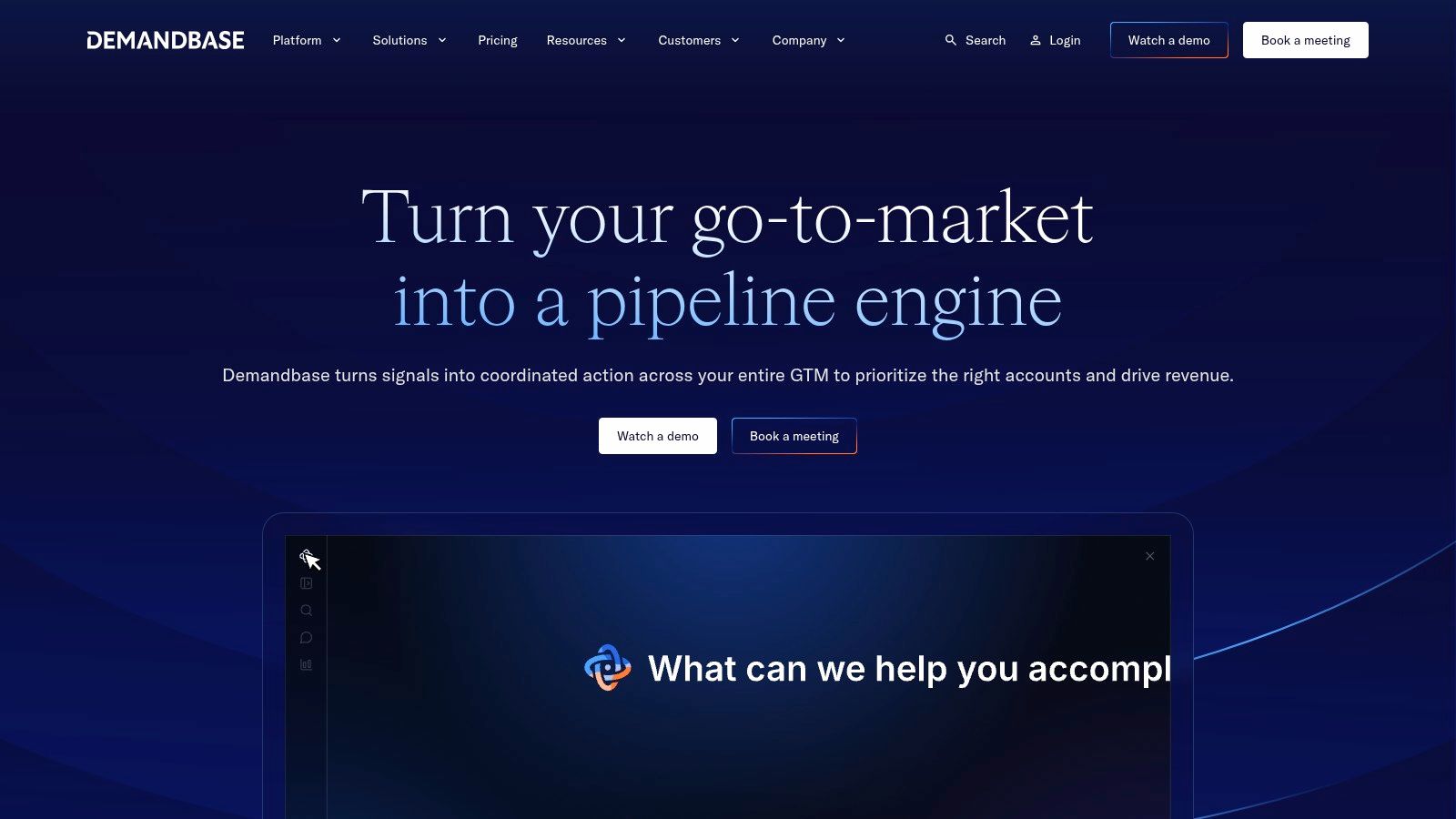
Demandbase One is another enterprise ABM platform, but its appeal comes from combining account qualification with activation. It brings together firmographics, technographics, engagement, proprietary intent, and predictive models such as Qualification Score and Pipeline Predict. Teams can use those signals to prioritize accounts, personalize website experiences, and activate advertising programs.
That breadth matters when marketing and sales need a shared account view. Lead-to-account matching can connect individual responses to account records, while CRM and marketing automation integrations help distribute scores to the systems sellers already use. The platform can also support advertising and DSP capabilities, which makes it more than a qualification database.
A platform for coordinated ABM
Demandbase is a strong candidate for mature enterprise ABM teams with enough campaign complexity to use its activation layer. Its explainability resources can help RevOps and sales understand why an account receives a priority signal, although the team still needs to validate whether those signals predict outcomes in its market.
The trade-off is scope. A company that only needs form enrichment or a simple visitor alert may pay for capabilities it won’t operationalize. Pricing is sales-led and generally enterprise-level, and implementation requires agreement across marketing, sales, data, and operations.
Treat the predictive score as a prioritization input, not a replacement for direct qualification. A high account score can tell a rep where to look. It can’t reliably answer the buyer’s current need, timeline, decision process, or objections without an interaction. Demandbase is therefore most useful when account-level activation is the bottleneck and the organization can support a full ABM operating model.
7. ZoomInfo FormComplete and Enrich
ZoomInfo’s FormComplete solves the friction problem directly. Instead of asking prospects to complete a long form, teams can collect a smaller amount of information and enrich the submission in real time with company and contact details. That can improve routing and ICP checks without making the buyer perform the data-entry work.
The product becomes more powerful when paired with ZoomInfo Enrich for CRM hygiene and WebSights for visitor intelligence. Together, those modules support a workflow in which the form captures the initial identity, enrichment fills the qualification fields, and routing sends the record to the right team.
What to validate before purchase
ZoomInfo’s broad B2B data graph and marketing and sales integrations are useful when the target segment has strong coverage. They aren’t a guarantee of accuracy for every region, industry, role, or company type. Run a sample against your own inbound records and inspect the fields that drive routing, rather than judging data quality from a generic match rate.
Pricing isn’t publicly listed and varies by package and add-ons. That makes the commercial model harder to compare with a focused form tool. Buyers should price the modules together, estimate enrichment volume, and clarify what happens when records are incomplete or conflicting.
ZoomInfo is a good fit for marketing operations and RevOps teams that want less form friction while preserving firmographic qualification. It won’t create a live buyer conversation by itself. If anonymous website behavior is the primary problem, this guide to identifying anonymous website visitors covers the adjacent workflow.
8. Clearbit by HubSpot
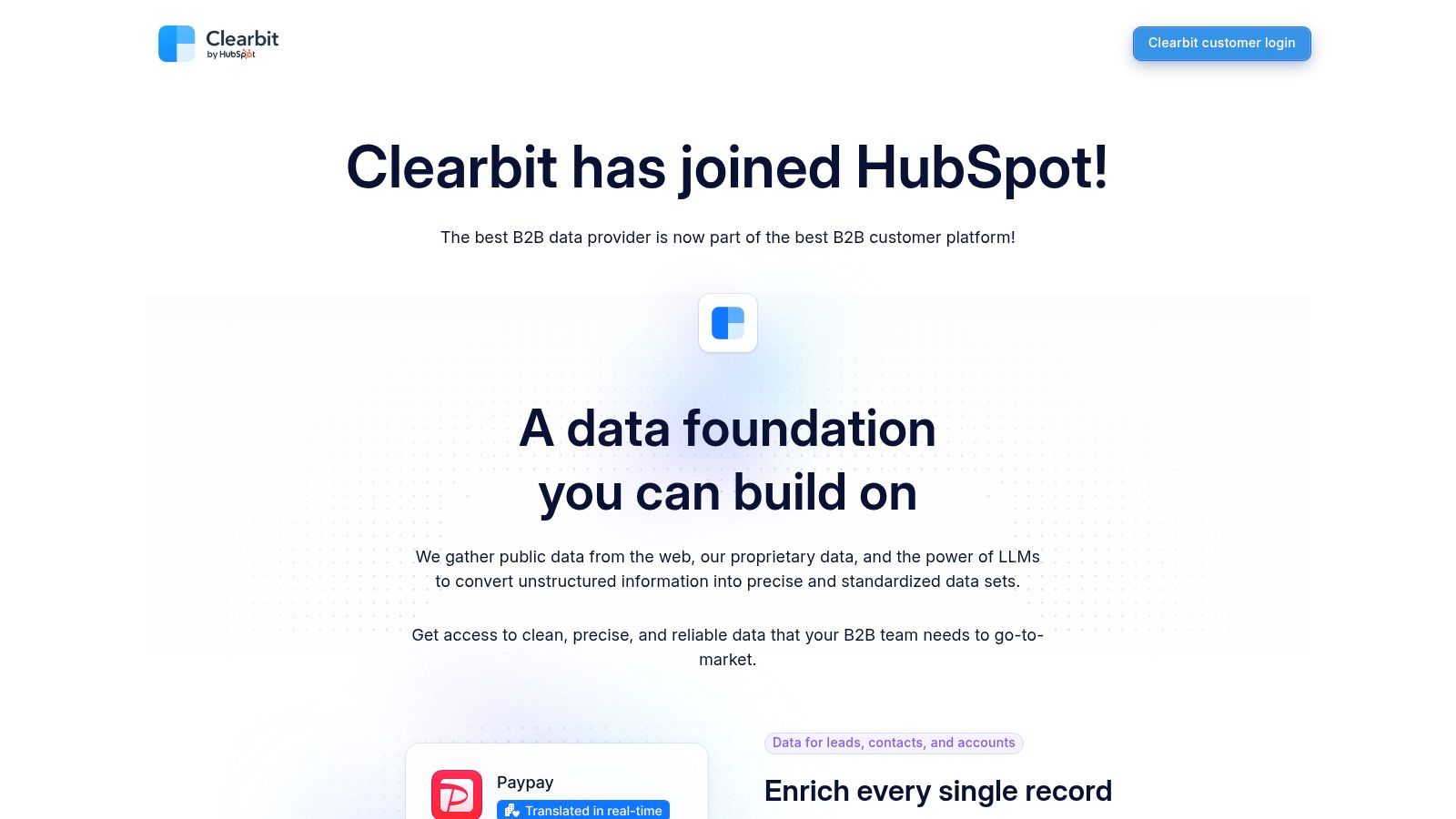
Clearbit is an enrichment and visitor-identification choice for teams that already rely heavily on HubSpot. Reveal can identify visiting companies, while form shortening and real-time enrichment help reduce submission friction. APIs and workflow support give technical teams room to build custom routing or segmentation logic.
The product’s main advantage is continuity. A HubSpot-centered team can use enriched company data for scoring, lifecycle automation, ABM tiering, and routing without introducing a separate account intelligence operating model. That can simplify administration and make adoption easier for marketing teams already working inside HubSpot.
The post-acquisition question
Packaging and pricing have evolved since HubSpot acquired Clearbit, so buyers need to confirm what capabilities and limits apply to their current HubSpot plan. This is especially important for teams comparing historical Clearbit functionality with the current product experience.
Clearbit is most useful when company-level identification and data enrichment are the immediate bottlenecks. It can help a team decide whether a visitor or submission fits its ICP, but it doesn’t replace direct questioning or a human handoff. Buyers outside the HubSpot ecosystem may also find that the integration advantage is less meaningful than the data and workflow alternatives available to them.
Use Clearbit when your qualification process already lives in HubSpot and you want to reduce form friction, improve segmentation, and support routing with better company context. Don’t choose it solely because enrichment sounds like qualification. Enrichment provides evidence about fit. Qualification still requires a decision about readiness and next action.
9. Leadfeeder
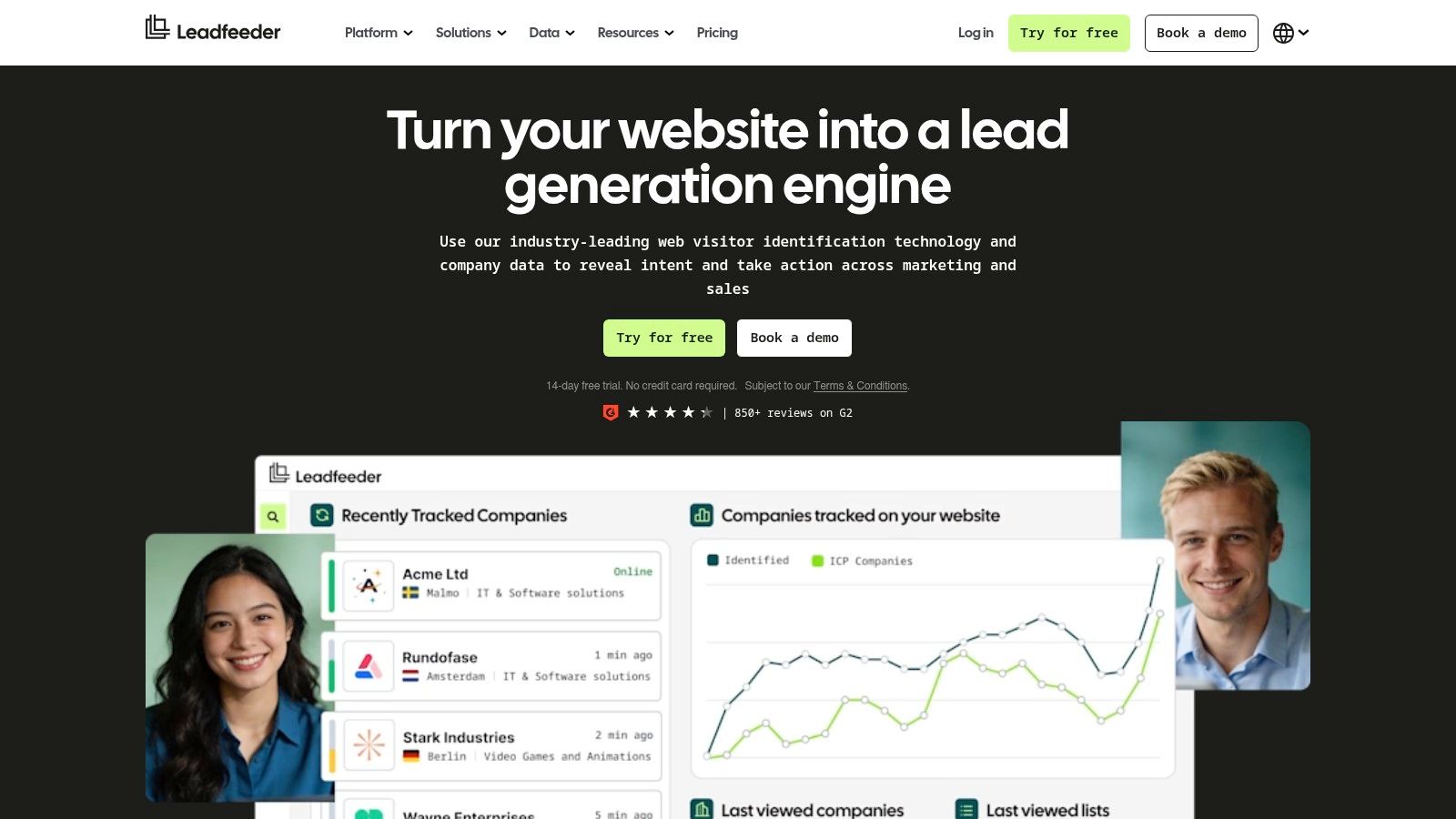
Leadfeeder is designed for teams that need to know which companies are visiting the website, even when those visitors don’t submit a form. It shows company-level visit activity, pages viewed, and return behavior, then pushes useful accounts and intent context into CRM and collaboration workflows.
That makes it a practical choice for SDR teams doing account-based prospecting. A returning company that spends time on product or pricing content can become a prioritized account for outreach. CRM sync, notes, and Slack alerts help turn that signal into a task instead of leaving it buried in a marketing analytics report.
The limit is contact-level qualification
Leadfeeder identifies accounts, not necessarily the individual person who made the visit. Reps still need to find the right contact, confirm the buying context, and start the conversation. Reverse-IP coverage also varies by region and industry, so teams should test identification quality against their actual traffic mix.
The pricing basis is the number of companies identified per month, with add-ons and multi-site monitoring available. That is easier to understand than some enterprise intent contracts, but it can still become expensive if the site produces a large volume of low-value identified accounts. Set filters early around target markets, pages, engagement patterns, and account fit.
Leadfeeder suits lean marketing and SDR teams that want a straightforward account signal without adopting a full predictive ABM platform. It is not the best answer when the business needs instant human conversation or verified individual-level answers. It is strong at surfacing where sales should look next.
10. HG Insights Revenue Growth Intelligence
HG Insights Revenue Growth Intelligence targets the deepest end of the comparison, where qualification depends on predictive scoring across fit, need, technology, spend, and intent. The platform uses technographic and firmographic intelligence with predictive models for accounts and leads. Data Studio and Sales Copilot are intended to help RevOps teams move those scores into practical workflows rather than leaving them in a planning dashboard.
The acquisition of MadKudu in August 2025 expanded HG Insights’ ability to combine predictive lead and account scoring with segmentation and activation. The result is a platform aimed at organizations that want to embed qualification intelligence into CRM processes, sales guidance, and custom data flows.
Predictive scoring needs historical discipline
HG Insights is a strong fit for enterprise teams with substantial B2B data, complex segmentation, and a need for technographic market coverage. APIs can help teams place scores inside existing applications, while Quick Start Account Scoring supports a more structured entry point than building every model from scratch.
The limitation is model dependency. Best performance requires historical outcomes data, consistent definitions of qualified stages, and enough operational discipline to feed sales results back into the system. If your CRM has unreliable opportunity stages or sparse closed outcomes, a predictive layer may produce confidence without dependable precision.
Pricing is quote-based and enterprise-oriented. Evaluate not just the model, but the activation path: who receives the score, what action follows, how overrides are recorded, and how quickly the team can detect stale or misleading signals. HG Insights is for organizations whose bottleneck is predictive account and lead prioritization, not for teams that only need a faster response to a website inquiry.
Top 10 Lead Qualification Tools Comparison
| Product | Core features | UX & performance | Price & value | Target audience & unique selling points |
|---|---|---|---|---|
| 🏆 Captiwate | ✨ In‑browser live video, AI chat, co‑browsing, intent detection, one‑click scheduling, native CRM sync | 4.8★ G2; 3–5× demos, ~60% fewer no‑shows; sub‑second routing | 💰 Traffic‑based, unlimited seats/calls; from $15,000/yr | 👥 B2B inbound SDRs, ABM, PLG, RevOps; ✨ behavioral triggers, single JS snippet, SOC2/ISO/GDPR |
| Qualified | ✨ AI SDR (Piper): chat/voice/video, behavioral & ABM targeting, Salesforce analytics | Real‑time qualification; strong Salesforce attribution | 💰 Sales‑led, quote‑based (mid→enterprise) | 👥 Salesforce‑centric sales teams; ✨ Salesforce‑native analytics, multi‑modal engagement |
| Chili Piper | Form‑level qualification, Concierge Live (instant phone), territory & round‑robin routing | Boosts speed‑to‑lead & show rates; fast JS install | 💰 Quote‑based; package pricing, JS snippet deploy | 👥 SDRs/AEs, sales ops; ✨ instant phone connects, robust handoffs |
| Salesloft Chat Agents | AI chat agents, CRM personalization, routing into Salesloft workflows | Tight handoff into seller cadences; consolidated within Salesloft suite | 💰 Part of Salesloft platform (quote‑based) | 👥 Salesloft users & revenue teams; ✨ integrated with cadence & Predictive Revenue System |
| 6sense | Predictive intent, account scoring, enrichment APIs, sales intelligence | Strong account prioritization for ABM; mature predictive models | 💰 Enterprise pricing; significant implementation | 👥 ABM teams, enterprise GTM; ✨ broad market signals & predictive accuracy |
| Demandbase | Qualification Score, lead‑to‑account matching, on‑site intent + personalization, ad/DSP options | Deep account scoring + activation (ads & personalization) | 💰 Enterprise, sales‑led | 👥 Enterprise ABM programs; ✨ full‑stack ABM (score → activate) |
| ZoomInfo (FormComplete & Enrich) | Real‑time form enrichment, WebSights visitor intel, data hygiene (Enrich) | Reduces form friction; improves routing & ICP checks | 💰 Bundle pricing; varies by modules/add‑ons | 👥 Sales & marketing teams needing data; ✨ large B2B data graph & integrations |
| Clearbit (by HubSpot) | Reveal (reverse‑IP), form shortening, real‑time enrichment, APIs | Deanonymizes visitors; smooth HubSpot workflows | 💰 Packaging evolved post‑acquisition (variable) | 👥 HubSpot customers, ABM teams; ✨ deep HubSpot integration |
| Leadfeeder | Reverse‑IP company ID, visit timelines, CRM sync, alerts | Surfaces anonymous accounts quickly; easy to operationalize | 💰 Pricing by number of companies identified / mo | 👥 SMB→mid‑market B2B teams; ✨ straightforward company‑based pricing |
| HG Insights – RGI | Predictive account/lead scoring, technographics, Data Studio & Sales Copilot | Strong technographic & spend coverage; scores operationalized into workflows | 💰 Quote‑based enterprise pricing | 👥 Enterprise RevOps & GTM; ✨ technographic depth + predictive scoring |
Choose the Qualification Layer You Actually Need
There isn’t a universal best lead qualification tool because teams lose qualified opportunities at different points. Some teams fail before the buyer submits a form. Others capture demand successfully but route it slowly, enrich it poorly, or prioritize accounts with signals that sales can’t interpret. The right purchase starts with the broken moment, not the longest feature list.
Choose Captiwate or Qualified when the website is the bottleneck and buyers need an immediate, contextual interaction. Captiwate is especially compelling for teams that want live in-browser video, chat, co-browsing, AI coverage, and traffic-based pricing. Qualified is a better match for Salesforce-centered enterprise organizations that want conversational engagement tied closely to Salesforce reporting and GTM governance.
Choose Chili Piper when the form already captures demand and the problem is getting a qualified visitor onto the right calendar. Choose Salesloft Chat Agents when Salesloft is already the operating layer for seller action and the business wants to consolidate conversational qualification with cadence and revenue orchestration.
The fastest workflow isn’t always the best workflow. It only works when the receiving rep, territory rule, calendar, and CRM record are ready at the same time.
For data problems, ZoomInfo or Clearbit can reduce form friction and supply the company context needed for scoring and routing. ZoomInfo gives buyers a broader enrichment and visitor-intelligence ecosystem, while Clearbit is most natural for teams invested in HubSpot. Leadfeeder is the more focused choice when the team needs company-level website identification and practical alerts for SDR outreach.
For enterprise account scoring and intent activation, compare 6sense, Demandbase, and HG Insights. 6sense fits organizations focused on predictive account prioritization and orchestration. Demandbase adds broader ABM activation through advertising and personalization. HG Insights is suited to teams that need technographic coverage, predictive models, APIs, and RevOps activation. Don’t assume a predictive score answers questions that only a buyer can answer directly. Recent coverage of qualification software highlights a persistent clarity gap between what scoring predicts and what sales learns on the first call, which is why lead enrichment features should be assessed as inputs to qualification, not as qualification itself.
Before committing, run a focused pilot. Validate CRM ownership, signal coverage in your target market, routing rules, pricing basis, implementation effort, data governance, and the complete handoff experience from first signal to live conversation. Ask reps whether they receive enough context to act, not whether the dashboard looks polished.
The evidence behind speed-to-lead remains hard to ignore. InsideSales analyzed 55 million sales activities across 5.7 million inbound leads at more than 400 companies and reported that 57.1% of first call attempts happened after more than a week, while only 0.1% of inbound leads were engaged within 5 minutes (InsideSales response-time research). A newer survey of 939 B2B companies associated responses within 5 minutes or less with a 32% close rate, while some benchmark samples showed conversion falling to about 2.3% after more than 24 hours (Quo’s lead response-time benchmark). Those figures don’t tell you which vendor to buy. They tell you where to look for leakage.
Better qualification comes from matching the tool to the moment when buyer intent is visible. Start a conversation when the buyer is active, route the form when the workflow is clear, enrich only where data changes the decision, and use predictive scoring when the account context justifies the complexity.
Captiwate helps B2B teams turn high-intent website visits into live video, chat, co-browsing, AI-qualified conversations, or booked meetings, with CRM routing and scheduling built into the handoff. If your qualification problem starts before a form submission or disappears during slow follow-up, visit Captiwate to see how the platform can connect buyer intent to sales action.