The best router isn’t the one that assigns a lead fastest. It’s the one that preserves context from the first signal through the first conversation, meeting, and CRM update. A round-robin rule can distribute records quickly, yet still send a known account to the wrong owner, book a meeting without the right qualification data, or leave a sales rep working from a notification that never made it into the system of record.
A useful lead routing system needs to identify or qualify the buyer, apply ownership and availability rules, create the right conversation or meeting handoff, and synchronize what happened with the CRM. That means evaluating more than routing speed. The practical questions are how thoroughly the tool matches and qualifies, how it handles calendars and conversations, which systems it integrates with, how much implementation and governance it needs, and whether it fits your sales motion.
Speed still matters. A 2026 benchmark of 114 companies found that more than 99% weren’t responding to inbound leads within 5 minutes, while companies without lead routing tools took nearly 13 hours on average to respond, according to Workato’s lead response time study. The tools below are compared by the operational problem they solve, not by feature-count marketing. If you’re ready to set up automated lead routing, start by choosing the handoff your team can operate.
Table of Contents
- 1. Captiwate
- 2. LeanData
- 3. Chili Piper Distro
- 4. Openprise
- 5. RevenueHero
- 6. Qualified
- 7. 6sense Orchestrations
- 8. Zapier Lead Router
- 9. Workato
- 10. Tray.io
- Top 10 Lead Routing Tools, Feature Comparison
- Choose the Handoff You Can Actually Operate
1. Captiwate
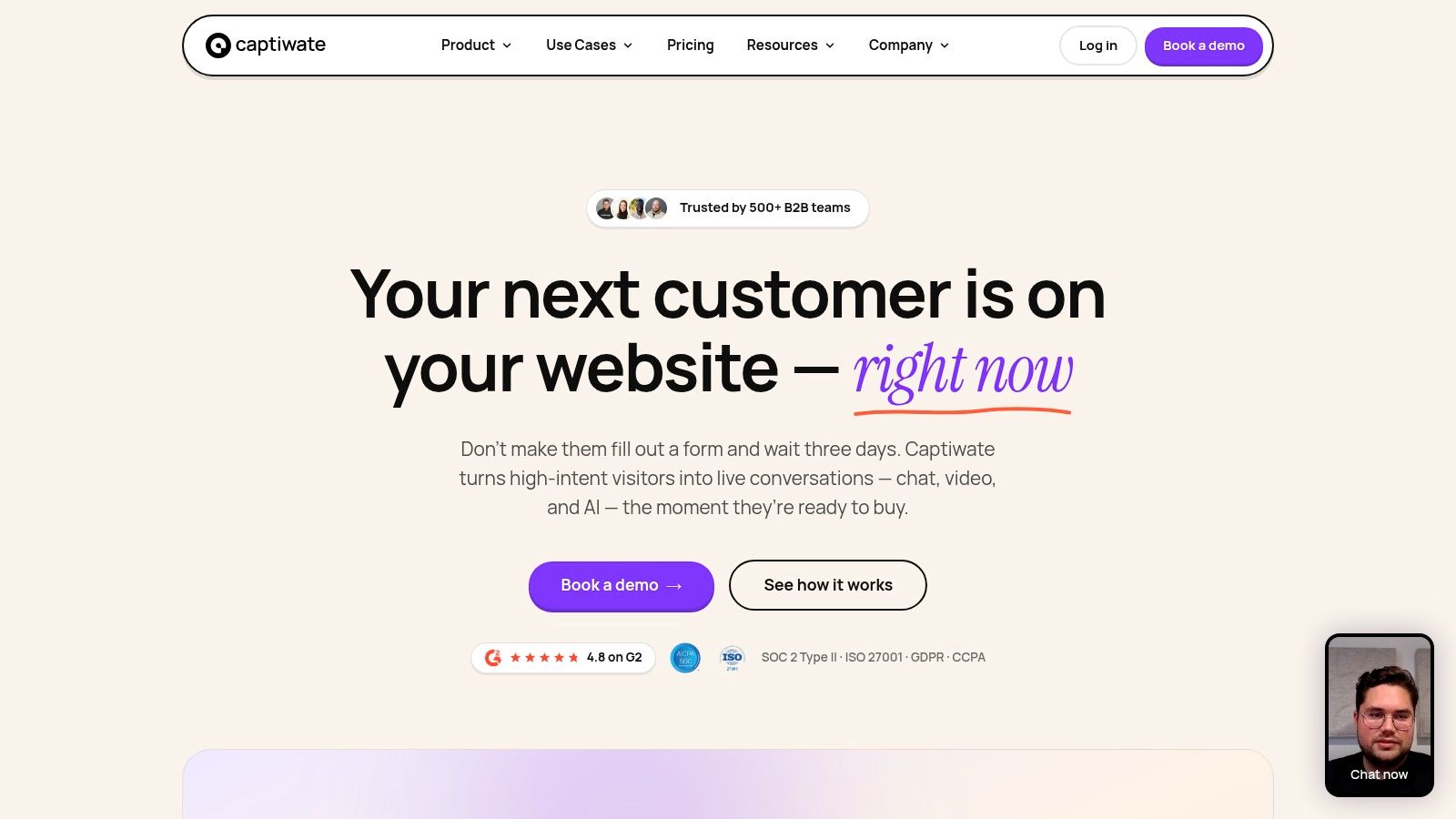
Captiwate is built for the moment when a high-intent visitor is already considering a purchase but hasn’t submitted a form or booked a meeting. It combines in-browser video, chat, visitor identification, behavioral intent signals, scheduling, and always-on AI so a buyer can reach a human or start qualification without downloading software or waiting for a queue.
The routing logic can use account ownership, territory, rep availability, visitor segment, and intent. That makes it more than a website chat widget. A pricing-page visitor from a known target account can be connected to the account owner, while an after-hours visitor can enter an AI qualification flow and receive a meeting path. The important operational question is whether that interaction remains useful after the handoff. Captiwate syncs conversations, identified accounts, intent signals, contacts, and meetings with HubSpot and Salesforce, alongside calendar, video, Slack, and Teams integrations.
Where Captiwate fits best
The strongest fit is a B2B team with meaningful inbound traffic that wants speed-to-conversation, not just speed-to-assignment. Captiwate’s implementation uses a single JavaScript snippet designed for same-day go-live, and its traffic-based pricing includes unlimited seats and conversations. The reference plans are $15,000 per year for up to 20,000 monthly visitors, $30,000 per year for 20,000 to 100,000 monthly visitors, and custom pricing above that range, as specified in the supplied pricing reference.
Customer materials report 3 to 5 times more demos from the same traffic, speed-to-lead under a minute in demo flows, and roughly 60% fewer no-shows. Those are customer-reported outcomes, not universal benchmarks, so buyers should validate them against their own traffic, consent model, and sales coverage. Captiwate also lists SOC 2 Type II and ISO 27001 certifications, GDPR and CCPA alignment, SSO/SAML, and custom data residency options.
Practical rule: A fast conversation only helps if the transcript, qualification context, owner, calendar event, and outcome reach the CRM together.
The trade-off is cost. The entry plan may be difficult to justify for a very small or low-traffic site, and visitor identification depends on consent and privacy settings. For teams focused on converting existing website demand, however, Captiwate addresses a gap that conventional routers leave untouched: the transition from anonymous intent to a live, attributable sales interaction.
2. LeanData
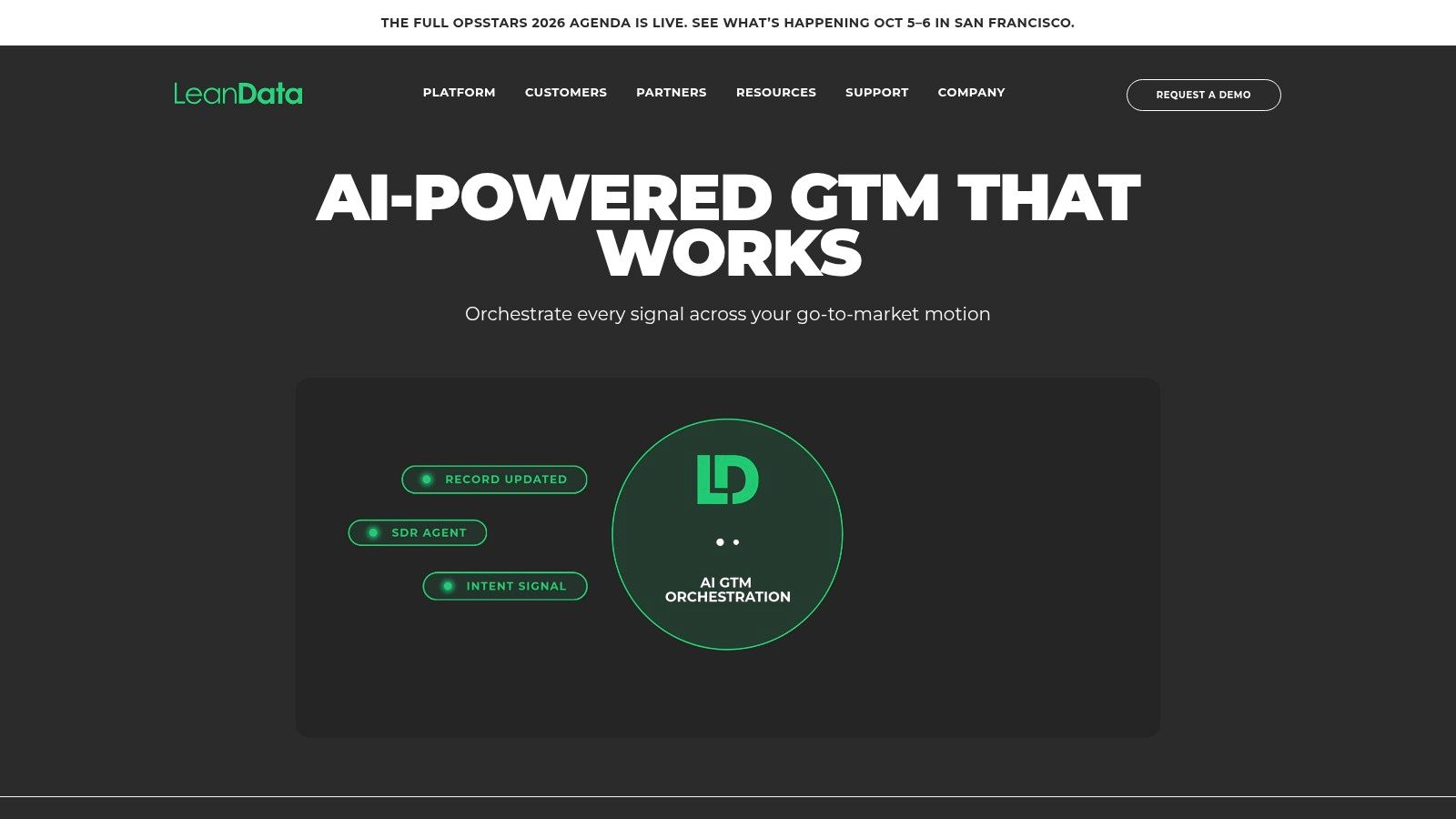
LeanData is the serious choice when Salesforce is the operational center of gravity and routing has become too complex for native assignment rules. It matches inbound leads to existing accounts, applies ownership and territory logic, and routes across Leads, Contacts, Accounts, and Opportunities. That multi-object approach matters when the same buyer journey touches several CRM records and a lead-only workflow would fragment ownership.
Its main strength is traceability. RevOps administrators can inspect the routing path, understand why a record went to a particular owner or queue, and manage exceptions through audit logs. Round-robin distribution, account ownership, territory rules, tie-breaking, and SLA handling support complex enterprise structures without forcing every change into custom code.
The Salesforce trade-off
LeanData is best when your team wants routing logic close to Salesforce data and governance. It isn’t the natural first choice for a company operating across several CRMs or one that mainly needs website conversations and instant booking. Pricing is custom and can become premium at scale, while the Salesforce-centric architecture is a benefit only if Salesforce is genuinely your source of truth.
Implementation also requires disciplined data modeling. Account matching, inactive-user handling, fallback queues, and ownership exceptions need decisions before administrators build the graph. Teams evaluating lead distribution software should test real duplicate, subsidiary, and unowned-account records rather than accepting a clean demonstration workflow.
LeanData solves complex CRM-native routing better than it solves immediate buyer engagement. If the lead already exists and the primary problem is assigning it correctly with an explainable trail, it’s a strong fit. If the bigger problem is that visitors abandon forms before creating records, you’ll need a separate engagement layer.
3. Chili Piper Distro
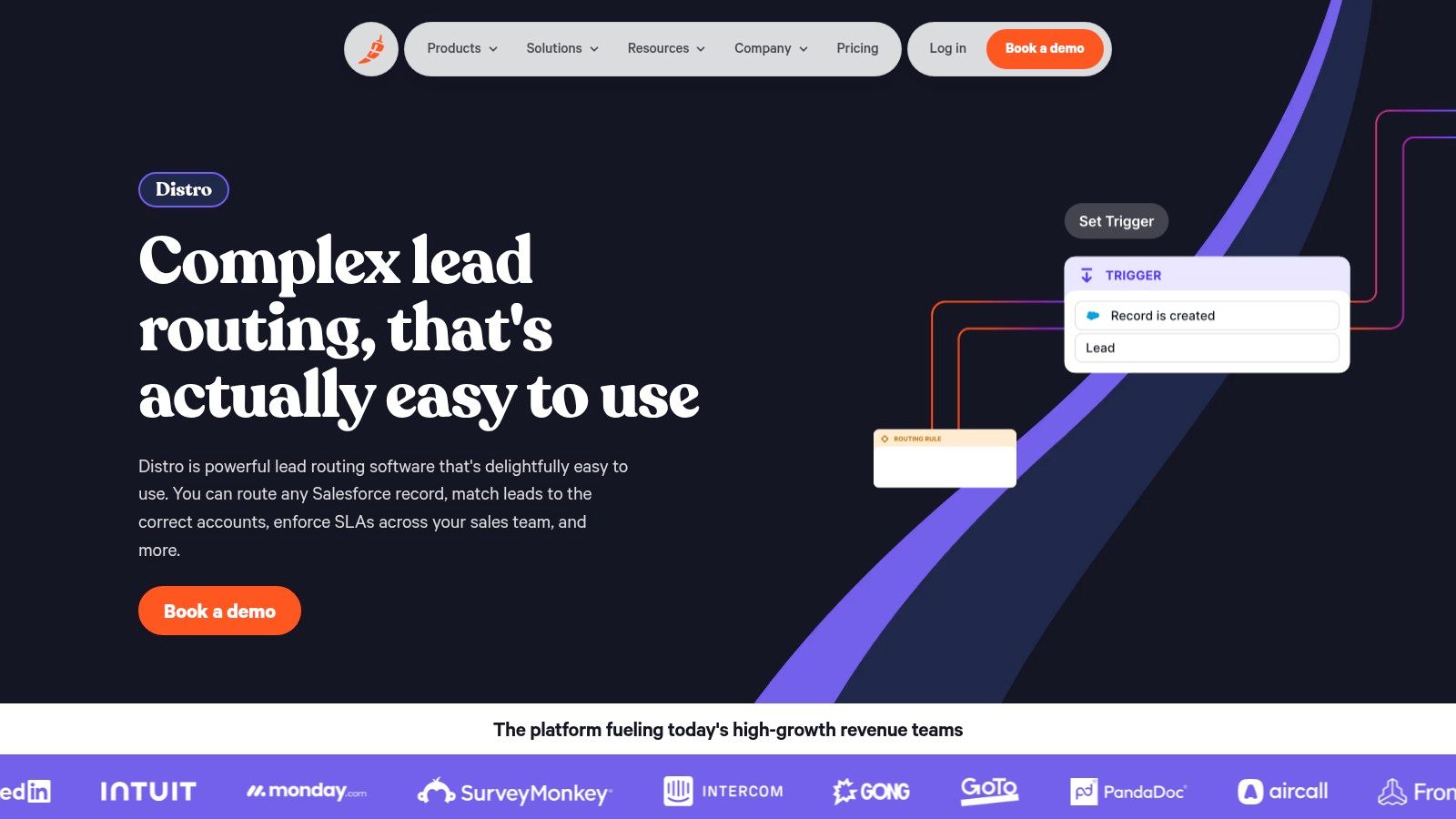
Chili Piper Distro makes the most sense for teams that already use Chili Piper to turn inbound interest into meetings. It responds to record creation or updates, matches leads to accounts, applies ownership and territory rules, and sends alerts through channels such as Slack. The handoff is strongest when the same stack controls the form, routing decision, calendar booking, and meeting workflow.
Fast inbound distribution
The product’s advantage is time-to-value. Admins can manage practical rules such as round-robin assignment, account ownership, territory, and alerts without building a broad integration program. SDRs also get a familiar path from inbound event to assigned work, which reduces the operational gap between marketing capture and sales action.
Distro isn’t as compelling as a standalone routing foundation for a business with unusual data orchestration requirements. Its best experience assumes a Chili Piper-centric environment, and pricing for Distro alone isn’t publicly listed on the main product page. Buyers should confirm which conversation, form, booking, and CRM fields are written back, because a meeting created in a scheduling tool isn’t the same as a fully synchronized CRM handoff.
The practical fit is clear. Choose Chili Piper Distro when immediate inbound distribution and scheduling continuity matter more than broad data cleansing or cross-system workflow design. If your team already relies on Chili Piper for forms and booking, fewer seams usually means fewer missed updates. If it doesn’t, compare the cost of adopting the wider suite against a focused router that integrates with your existing scheduling process.
4. Openprise
Openprise addresses the problem many routing projects discover too late: the rules aren’t necessarily wrong, but the data feeding them is unreliable. It provides no-code orchestration for ingesting, cleansing, enriching, matching, scoring, and routing CRM or marketing automation data. That makes it a better fit for organizations where territory, account matching, lead score, or rep availability fields regularly contain gaps and inconsistencies.
Data quality before routing logic
A router can’t make a dependable ownership decision from incomplete identity data. Openprise can consolidate upstream preparation with routing and territory automation, so operations teams can define how records are standardized before assignment. Its multi-signal approach can combine fit and engagement rather than relying on a single field that may be stale.
The platform’s breadth becomes both an advantage and a cost. A simple inbound team may find a data orchestration platform excessive when a CRM-native router would solve the immediate problem. Enterprise teams, on the other hand, may prefer one governed environment for enrichment, matching, routing, and change management instead of maintaining separate fixes across CRM workflows and spreadsheets.
The central trade-off is implementation scope. Pricing is custom, and the effort depends on the number of sources, matching rules, territories, and downstream systems involved. Openprise is a good choice when bad data is the operational bottleneck. It won’t remove the need for ownership definitions, deduplication policies, or review of edge cases. In fact, it makes those decisions more visible, which is exactly what a mature RevOps team needs.
5. RevenueHero
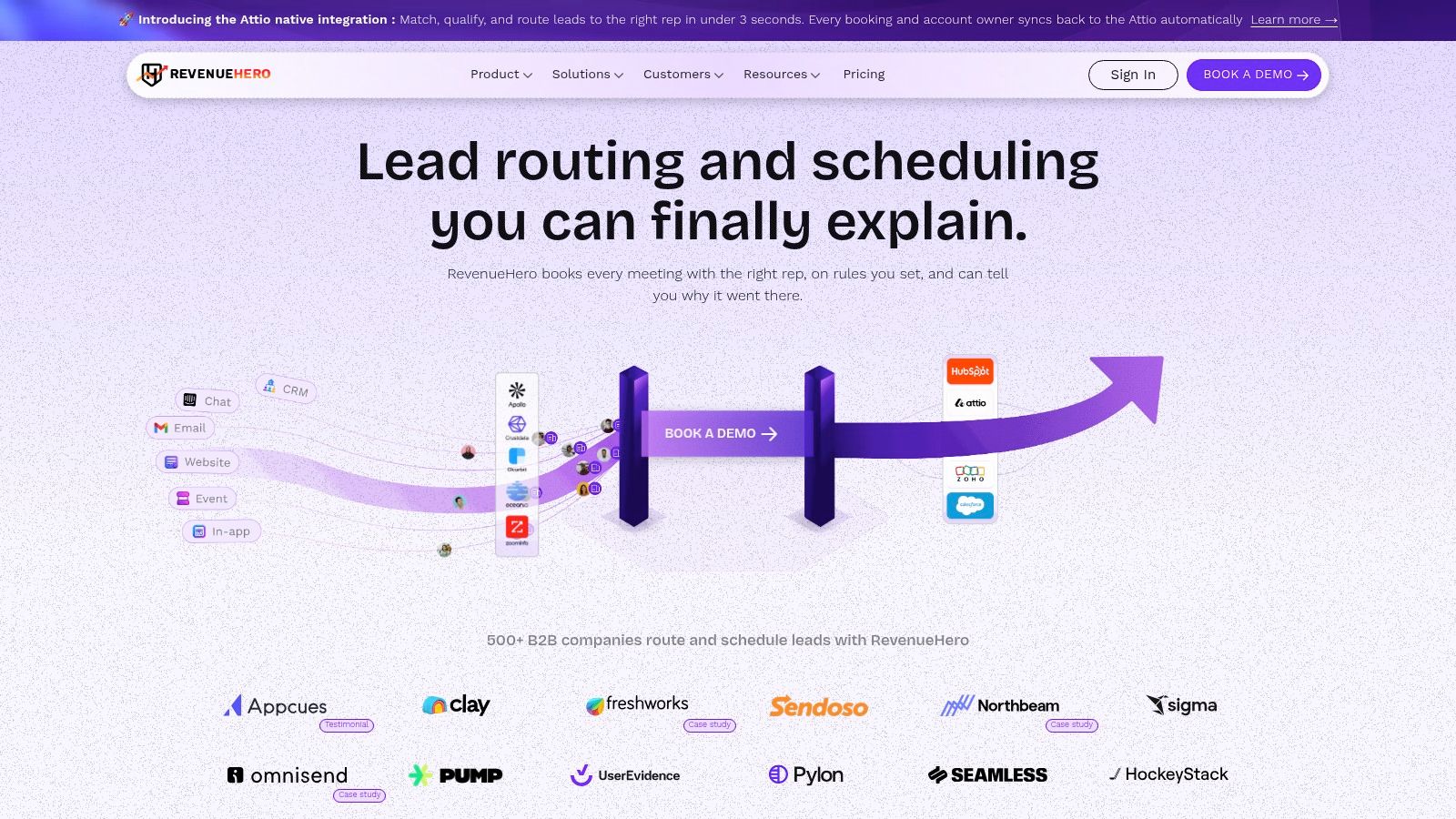
RevenueHero combines inbound routing with scheduling, which makes it useful for teams that judge handoff quality by how quickly a qualified buyer reaches a meeting. It checks existing ownership, applies rules for territory, language, product line, and availability, and supports collective round-robin distribution. Routing logs give operations teams a place to investigate why an assignment occurred instead of relying on assumptions.
Good operational coverage for inbound
The product handles common realities that basic round-robin systems miss. Vacation coverage, language assignment, shared pools, and availability rules can prevent a lead from being handed to an unavailable rep. Triggers can come from forms, campaigns, or in-app scheduling, and integrations include Salesforce, HubSpot, and collaboration tools.
RevenueHero is more focused than a data platform or enterprise iPaaS. If your main challenge is cleansing identities, resolving complex parent-child account structures, or coordinating many business systems, you’ll probably need another layer. Pricing isn’t fully public on the main site, so the commercial evaluation should include the scheduling and CRM capabilities your team intends to use.
One important test is whether a booked meeting creates the correct CRM activity, owner, status, and attribution fields. A scheduler can fill calendars while still leaving sales managers without a reliable record of source, qualification, or handoff outcome. RevenueHero is a practical fit for inbound and meeting-focused teams that want fast deployment and visible routing decisions, especially when fairness and availability are more important than elaborate data operations.
6. Qualified
Qualified is designed for Salesforce-centered teams that want to route website visitors through a conversational experience rather than wait for a form submission. It can use Salesforce ownership, ABM tier, territory, language, and intent signals to connect a visitor with the appropriate rep, live chat path, AI SDR workflow, or meeting calendar.
ABM context in the conversation
The product’s strength is the combination of account context and immediate engagement. A known target account can receive a different experience from an unqualified visitor, and the routing decision can reflect account ownership rather than treating every inbound person as an isolated lead. Slack and Teams alerts, visitor views, streams, meeting rules, and Salesforce workflows help reps act with more context.
That depth comes with a clear commercial boundary. Qualified is enterprise-oriented, pricing is custom, and the platform delivers the most value when a buyer is willing to use its broader conversational and ABM stack. Teams seeking a small routing utility may pay for capabilities they won’t operate.
CRM continuity deserves close attention here. Test whether the visitor’s conversation, account association, qualification answers, meeting, and follow-up status appear in Salesforce in a way that supports reporting and rep action. A live chat that isn’t tied to the opportunity context can still create a manual handoff.
For buyers comparing Qualified alternatives in 2026, Qualified is strongest when ABM prioritization and Salesforce-native visitor engagement are central. It isn’t just choosing a rep. It’s choosing the experience and context that precede the assignment.
7. 6sense Orchestrations
6sense Orchestrations is for organizations where routing depends on account-level intent, predictive signals, and firmographic context. It matches leads to accounts using 6sense algorithms, then uses conditional workflows to push prioritized buyers into the CRM, sales engagement tools, or other downstream destinations.
Prioritization before assignment
This approach differs from a simple ownership router. Instead of asking only who should receive a record, the workflow can determine whether the record deserves a particular sales motion, queue, or next step based on its account and buying signals. That makes it a strong fit for ABM teams that already depend on the 6sense ecosystem for prioritization.
The benefit is coordination. Marketing and sales operations can reduce manual list movement between systems and connect intent-based decisions to action. The risk is dependency. A company that isn’t already operating 6sense may face more implementation, governance, and training than it would with a focused router. Pricing is enterprise, and deployment generally involves RevOps or Marketing Ops ownership.
CRM synchronization needs a deliberate design. Decide which score, account association, campaign context, and workflow outcome should be written back, then confirm that sales engagement enrollment doesn’t create duplicate tasks or conflicting ownership. For a deeper view of the data layer behind this model, compare buyer intent data tools.
Choose 6sense when ABM prioritization is the routing decision. It isn’t the best answer for every website conversation or calendar handoff. Its value appears when intent and predictive context determine who should act, how urgently, and through which downstream workflow.
8. Zapier Lead Router
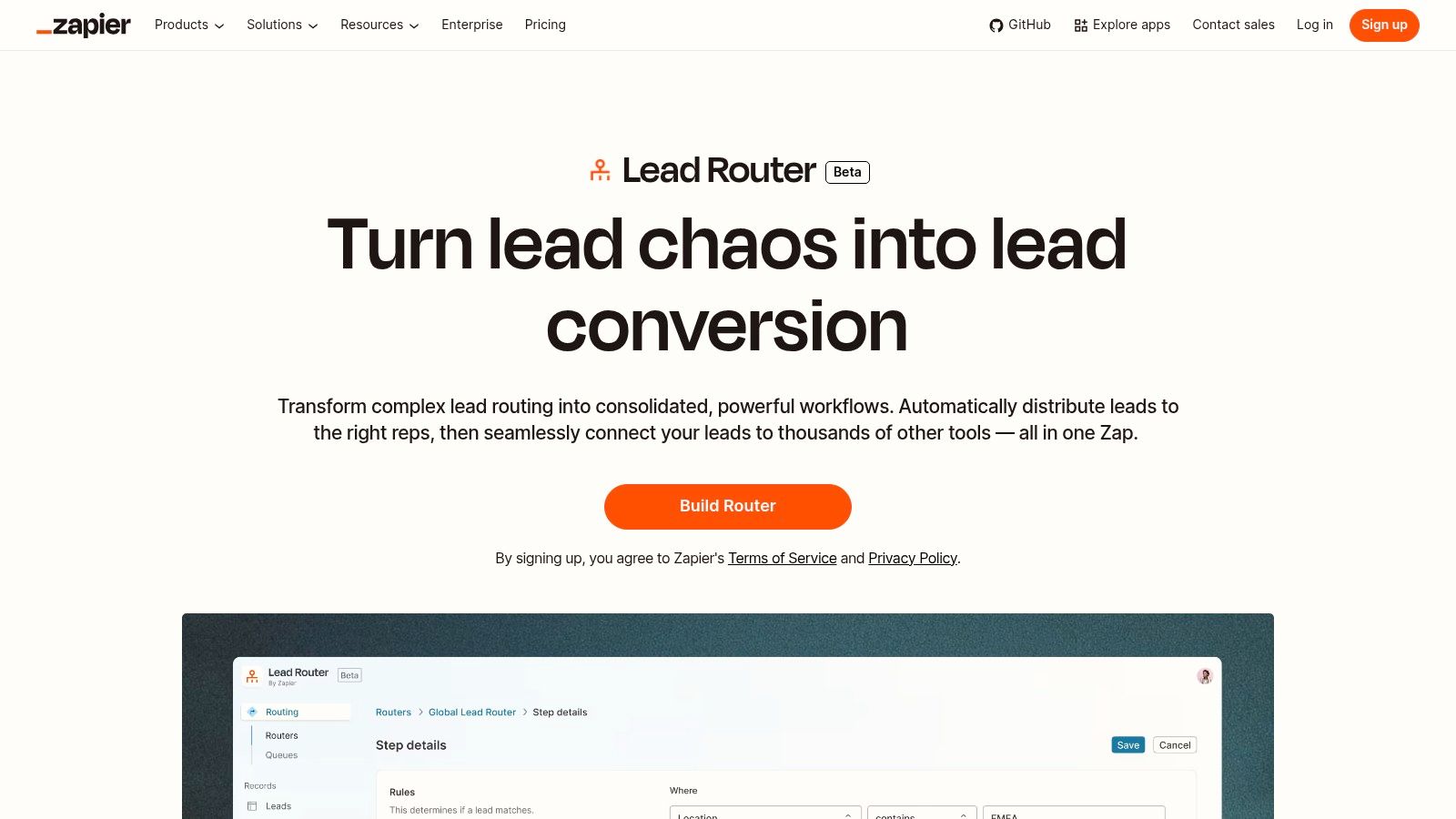
Zapier Lead Router is the pragmatic option for teams that need distribution quickly without adopting an enterprise routing platform. It supports strict or weighted round-robin rules, filters, team-member capacity caps, and assignment history. Because it works inside the broader Zapier ecosystem, leads can originate in forms, advertising tools, chat platforms, or other applications and still enter a common distribution flow.
Where no-code is enough
The setup is attractive when the routing model is straightforward. A small or growing team can define a pool, apply filters, cap capacity, and trigger notifications without waiting for a Salesforce development project. Zapier is also useful when the lead source isn’t the CRM and the business needs a practical bridge between tools.
The limitation is CRM depth. Zapier Lead Router isn’t a CRM-native replacement for complex Salesforce matching, multi-object ownership, or enterprise auditability. Once rules depend on account hierarchies, detailed territory logic, or several exception paths, a collection of Zaps can become difficult to inspect and maintain.
Use Zapier Lead Router when speed of implementation and cross-app flexibility matter more than deep governance. Before launch, document the source of truth for ownership and confirm that the assigned rep, notification, calendar event, and CRM record all use the same identifier. Otherwise, you may distribute work quickly while still creating duplicate contacts or disconnected meetings.
9. Workato
Workato is an enterprise automation platform, not a dedicated lead router. Its strength is coordinating the full handoff: enrichment, identity matching, ownership checks, CRM updates, notifications, sales engagement enrollment, and SLA escalation across Salesforce, HubSpot, Marketo, enrichment providers, and collaboration tools.
For cross-system governance
Workato fits teams where routing sits inside a broader revenue workflow. Real-time triggers can enrich a record, verify ownership, update the CRM, notify the right rep, and enroll the lead in follow-up. Version control, error handling, failure monitoring, and IT governance make the workflow easier to manage across multiple systems.
That flexibility creates a clear trade-off. Workato requires recipe design, testing, monitoring, and administrators who understand each system’s dependencies. Pricing is custom and usage-based, so a dedicated router may offer better value for a simple round-robin process.
Judge an implementation by the handoff outcome, not recipe completion. Confirm that the correct owner was assigned, the rep received useful context, and the conversation or booked meeting was written to the right CRM record. Check that exceptions are visible to operations and that retries do not create duplicate activities. The 2026 lead response study found that routing software can improve speed without automatically fixing follow-up delays, so automation completion is an incomplete success measure.
Choose Workato when custom orchestration, monitoring, and governance justify the build. If the workflow does not require those controls, a dedicated router will usually be easier to operate.
10. Tray.io
Tray.io sits between native automation and bespoke engineering. It provides low-code connectors and reusable patterns for round-robin, territory-based routing, enrichment, and multi-source workflows across Salesforce, HubSpot, Marketo, Slack, and other systems.
A flexible bridge
Tray.io works well when native CRM automation is too limited but a full custom application would be excessive. A team can build a routing flow once and reuse it across inbound sources, which helps standardize assignment logic when forms, campaigns, chat, and product events all create demand.
The trade-off is that Tray.io isn’t a dedicated routing product. Administrators still need to define data contracts, error handling, fallback behavior, and monitoring. The available guides and patterns accelerate the build, but they don’t make ownership policy disappear. Pricing is custom and varies with usage and workspace needs.
Before selecting Tray.io, run an actual workflow with incomplete territory data, an existing account owner, an unavailable rep, a duplicate contact, and a meeting booked outside the normal path. Then inspect the CRM record, alerts, activity history, and retry behavior. Tray.io is a good fit for multi-system flexibility without full custom code, but it demands more operational discipline than a purpose-built inbound router.
Top 10 Lead Routing Tools, Feature Comparison
| Product | Core capabilities | UX / Quality (★) | Pricing / Value (💰) | Target audience (👥) | Unique edge (✨) |
|---|---|---|---|---|---|
| Captiwate 🏆 | In-browser live video, AI chat, intent detection, scheduling, co-browsing, native CRM & calendar sync | ★★★★★ | 💰 Traffic-based: Grow $15k/yr, Scale $30k, Unlimited custom, unlimited seats/convos | 👥 B2B inbound, ABM, enterprise GTM teams | ✨ Instant in-browser video + always-on AI; single JS; unlimited conversations |
| LeanData | Rules-based lead→account matching and Salesforce routing with audit trails | ★★★★☆ | 💰 Custom / premium, enterprise ROI | 👥 RevOps & Salesforce-centric enterprises | ✨ Deep audit logs, multi-object match & routing |
| Chili Piper Distro | Real-time routing, lead-to-account matching, integrates with Chili Piper booking/forms | ★★★★☆ | 💰 Custom; best value within Chili Piper stack | 👥 Teams standardizing on Chili Piper for booking/forms | ✨ Fast inbound distribution with built-in alerts |
| Openprise | No-code data orchestration: ingest → cleanse → match → score → route | ★★★★ | 💰 Custom; broad platform value for data ops | 👥 Data/RevOps needing data quality & governance | ✨ End-to-end pipelines + sub-minute routing |
| RevenueHero | Inbound router & scheduler, ownership checks, routing logs, round-robin & availability rules | ★★★☆☆ | 💰 Not fully public; SMB–mid-market focus | 👥 Inbound/scheduling-first teams | ✨ Detailed routing logs; practical availability/language rules |
| Qualified | Conversational platform with real-time routing, AI SDRs, meeting handoff, Salesforce-native | ★★★★ | 💰 Enterprise / custom | 👥 ABM teams and Salesforce shops | ✨ Strong ABM routing by owner/territory with visitor streams |
| 6sense Orchestrations | Intent-driven match & conditional workflows that push prioritized buyers downstream | ★★★★ | 💰 Enterprise; part of 6sense ecosystem | 👥 ABM & marketing ops with predictive needs | ✨ Predictive intent + conditional orchestration |
| Zapier Lead Router | No-code lead distribution (weighted/strict round-robin, capacity, filters) across apps | ★★★☆☆ | 💰 Cost-effective; Zapier plan pricing | 👥 Small teams needing fast, low-cost routing | ✨ Rapid, no-code setup across hundreds of apps |
| Workato | Low-code iPaaS for enrichment→match→route recipes with governance & monitoring | ★★★★ | 💰 Custom / usage-based, enterprise-grade | 👥 IT / RevOps needing robust, governed automations | ✨ Enterprise governance, error handling, extensive connectors |
| Tray.io | Low-code automation with routing patterns and reusable flows across systems | ★★★★ | 💰 Custom; usage/workspace pricing | 👥 Ops teams wanting flexible, reusable pipelines | ✨ Build-once, reuse-across-inbound-sources approach |
Choose the Handoff You Can Actually Operate
The right lead routing tool depends on where your handoff fails. If the problem starts on the website, choose Captiwate for real-time video, chat, visitor identification, AI qualification, and meeting capture. It fits teams that want to convert high-intent traffic into a live conversation while keeping the conversation, identified account, meeting, and outcome synchronized with HubSpot or Salesforce.
Choose LeanData when Salesforce-native complexity is the main issue. It handles account matching, ownership, territory logic, multi-object routing, and auditability for RevOps teams that need to explain every assignment. Chili Piper Distro and RevenueHero are better fits when inbound scheduling is central and the team wants a direct path from form or campaign event to an available rep and booked meeting.
Data quality changes the decision. If incomplete, inconsistent, or duplicated records are causing routing failures, Openprise is more appropriate than adding more conditions to a brittle workflow. Smarter automation won’t compensate for unreliable account and identity data. In fact, more automation can amplify bad data faster, particularly in complex B2B funnels with duplicate accounts, mixed buyer roles, and multiple systems of record.
For ABM-led prioritization, Qualified and 6sense Orchestrations bring account ownership, intent, predictive context, and visitor or downstream workflow decisions closer together. Qualified is especially strong for Salesforce-based conversational engagement. 6sense is more compelling when intent data determines which accounts deserve action and how sales and marketing systems should respond.
Use Zapier Lead Router for straightforward no-code distribution across many apps. Pick Workato when enterprise governance, error handling, monitoring, and custom cross-system recipes justify the operational investment. Tray.io is a flexible low-code bridge when native CRM logic isn’t enough but a bespoke application would be excessive. The choice isn’t about the longest feature list. It’s about how much routing complexity your team can maintain without creating new handoff failures.
Implementation should begin with ownership rules, not vendor configuration. Define account precedence, territory exceptions, availability, fallback queues, escalation paths, and the meaning of a meaningful response. A practical technical benchmark is to route and answer high-intent demo or pricing inquiries within 5 to 15 minutes during coverage hours, while live chat and call requests should be treated as immediate, according to this speed-to-lead benchmark. Measure first meaningful response separately from automated acknowledgements.
Track SLA attainment by lead tier rather than relying only on averages. One industry framework recommends targeting P75 under 30 minutes and P90 under 2 hours for high-intent inbound leads, while another analysis reports that companies with a documented response-time SLA hit a 15-minute standard 54.9% of the time, compared with 29.5% without one, as detailed in this CRM SLA framework. Use those figures as operational reference points, then set targets your coverage model can support.
Finally, map conversation fields, qualification answers, meeting records, owner changes, and downstream outcomes into the CRM before launch. Test duplicates, unowned accounts, inactive reps, after-hours inquiries, calendar conflicts, reassignment, and failed integrations. Review assignment history and follow-up completion regularly, and use a documented CRM with workflow automation guide to keep the process connected beyond the initial assignment.
Captiwate turns high-intent website traffic into live video conversations, AI-qualified handoffs, and booked meetings while syncing the context with your CRM and collaboration tools. If your team wants faster engagement without losing ownership, qualification, or meeting data between systems, visit Captiwate and evaluate the workflow against your real inbound motion.