A high-intent prospect lands on your pricing page, starts a conversation with an AI assistant, and asks a question your sales team can’t answer from the public website: Where is our data stored, who can access the transcript, and what happens if your CRM provider is breached?
The prospect isn’t being difficult. They’re doing basic vendor due diligence. In a B2B SaaS buying process, the security page often receives attention before the product demo, especially when your platform identifies visitors, records conversations, routes leads, and synchronizes data with Salesforce, HubSpot, Slack, or calendar systems.
That changes the role of information security and compliance. Security isn’t only an IT responsibility or an annual audit exercise. It determines whether your service can operate reliably, whether enterprise buyers can approve it, and whether your team can explain its controls when something goes wrong.
Table of Contents
- The High Stakes of Security Failures
- Understanding Common Security Standards
- How Modern Threats Shape Architecture
- The Role of AI in Sales Security
- Making Compliance Operational
- Building Trust with Automated Controls
- The Business Case for Security First
The High Stakes of Security Failures
The prospect on your pricing page may never become a customer. They might still expose your company to risk by entering a conversation, sharing a screen, requesting a demo, or allowing an AI system to infer buying intent. Each interaction can create records across your browser application, analytics layer, conversation store, CRM, notification tools, and identity provider.
That chain is useful for revenue teams, but it also creates more places where a failure can occur. A compromised administrator account could expose transcripts. A poorly controlled integration could copy sensitive CRM fields into an inappropriate system. An outage could stop routing, scheduling, and customer communication at the moment your sales team needs them.
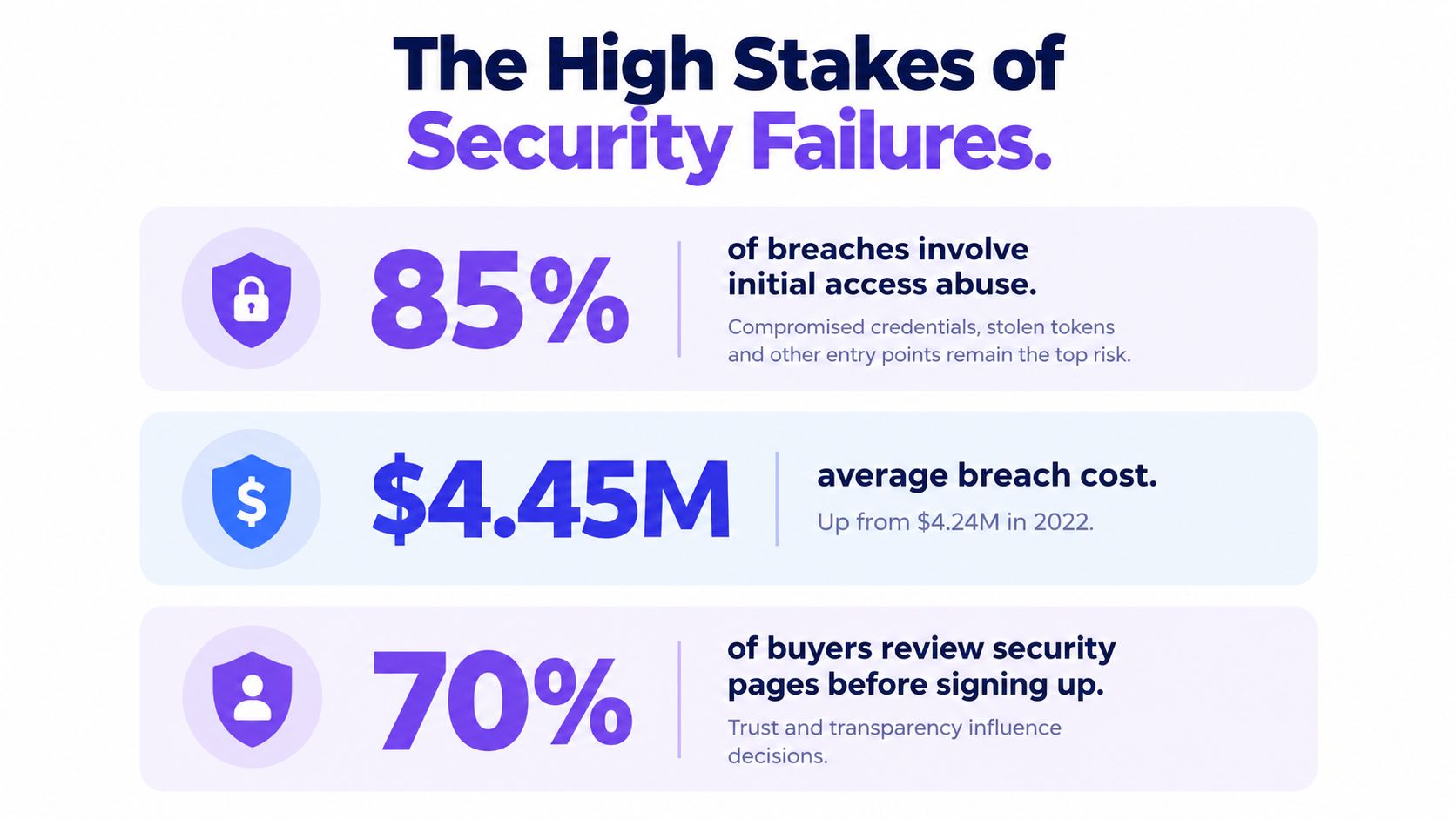
IBM’s 2025 Cost of a Data Breach study, based on breaches experienced by 600 organizations globally between March 2024 and February 2025, reported a worldwide average breach cost of $4.44 million. That was a 9% decline from $4.88 million in 2024, but the figure still includes forensic work, legal services, customer notification, credit monitoring, remediation, operational disruption, lost revenue, and customer turnover.
Security is a continuity discipline
The global average hides an important commercial reality. The United States recorded an average breach cost of $10.22 million, a 9% year-over-year increase and the highest national or regional average reported in the IBM study. Detection and escalation alone averaged $1.47 million globally, nearly 10% lower than the previous year, before the organization accounts for notification, recovery, and lost trust.
Those costs don’t stay inside the security budget. Sales may lose access to customer history. Customer success may need to explain an incident to accounts that are considering renewal. Legal teams may have to investigate processing decisions that nobody documented. Executives may face questions about why a vendor was approved without evidence of access controls or tested recovery procedures.
Operational rule: Treat every sales data flow as part of the business continuity plan, not as a marketing-side implementation detail.
A security program should therefore answer practical questions before an incident occurs. Which systems hold recordings and transcripts? Which employees can export them? How quickly can an administrator revoke access? Which vendors receive customer data? Can the organization reconstruct what happened from reliable logs?
A polished trust center helps a buyer start that evaluation. It doesn’t replace the underlying controls. Buyers eventually want evidence that security decisions are embedded in the product, the integrations, and the daily operating model.
Understanding Common Security Standards
Security standards become useful when they translate broad intentions into repeatable responsibilities. They become less useful when teams treat certification as proof that every system is secure in every circumstance.
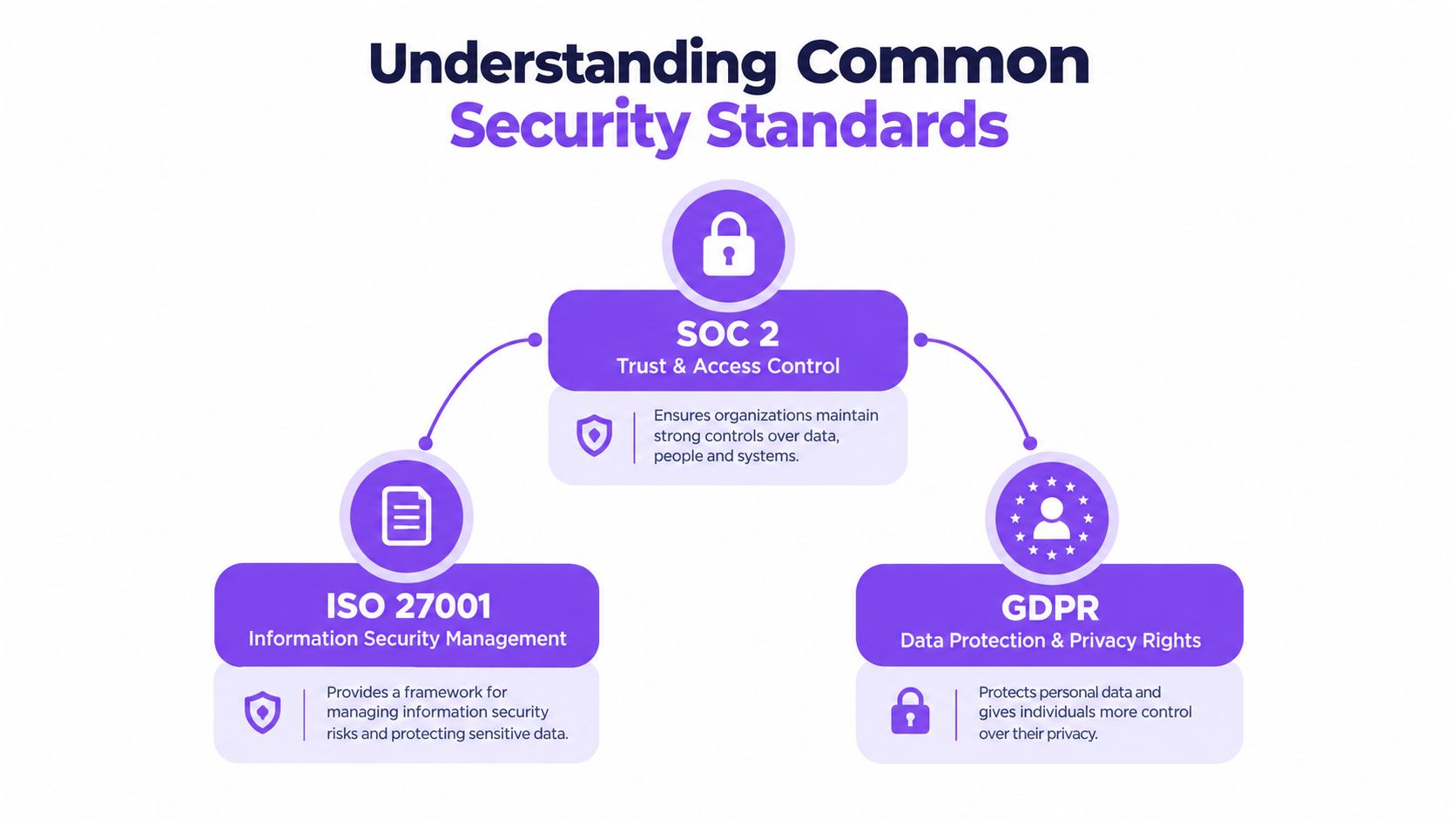
SOC 2 Type II generally gives buyers evidence that an organization has designed relevant controls and operated them over a period of time. For a SaaS provider, that usually means examining areas such as access management, change control, monitoring, incident response, vendor management, and system availability. The important word is operation. A policy stating that access reviews occur isn’t the same as evidence that reviews happened, exceptions were resolved, and terminated users lost access promptly.
ISO 27001 focuses on an information security management system. It connects risk assessment, control selection, leadership accountability, continual improvement, and documented processes. A company uses the framework to decide which risks matter, select controls that address those risks, assign ownership, and review whether the system remains appropriate as the business changes.
The two standards overlap, but they aren’t interchangeable badges. SOC 2 reports often help a buyer assess whether controls operated as described. ISO 27001 certification demonstrates that the organization runs a structured information security management system. The right question isn’t which logo looks more familiar. It’s whether the provider’s scope, control evidence, exceptions, and subprocessor coverage match your risk.
Standards are not privacy laws
GDPR and CCPA address privacy obligations and individual rights, rather than serving as direct substitutes for SOC 2 or ISO 27001. They raise questions about purpose, notice, access, deletion, disclosure, retention, and the legal basis or business context for processing. A company can hold a security certification and still mishandle a privacy request or collect data for a purpose it can’t justify.
For a sales engagement platform, the distinction matters. A security control may protect a visitor record from unauthorized access. A privacy control determines whether the organization should collect the record, how it should explain the processing, how long it should retain it, and how it should respond when someone exercises a right.
The same logic applies outside software. A practical overview of why compliance matters in electronics recycling shows how information-security responsibilities continue when organizations retire physical assets. The medium changes, but accountability for data handling doesn’t disappear at disposal.
A useful standards program maps each requirement to an owner, system, workflow, and piece of evidence. It also records what the control can’t guarantee. That honesty is more valuable than a certificate presented without scope or operational context.
How Modern Threats Shape Architecture
Architecture should reflect how attackers obtain access, not only how an audit describes controls. Verizon’s 2025 Data Breach Investigations Report analyzed 22,052 real-world security incidents, including 12,195 confirmed data breaches. Credential abuse represented 22% of breaches as an initial attack vector, while vulnerability exploitation represented 20%. Vulnerability exploitation increased by 34% compared with the previous reporting period.
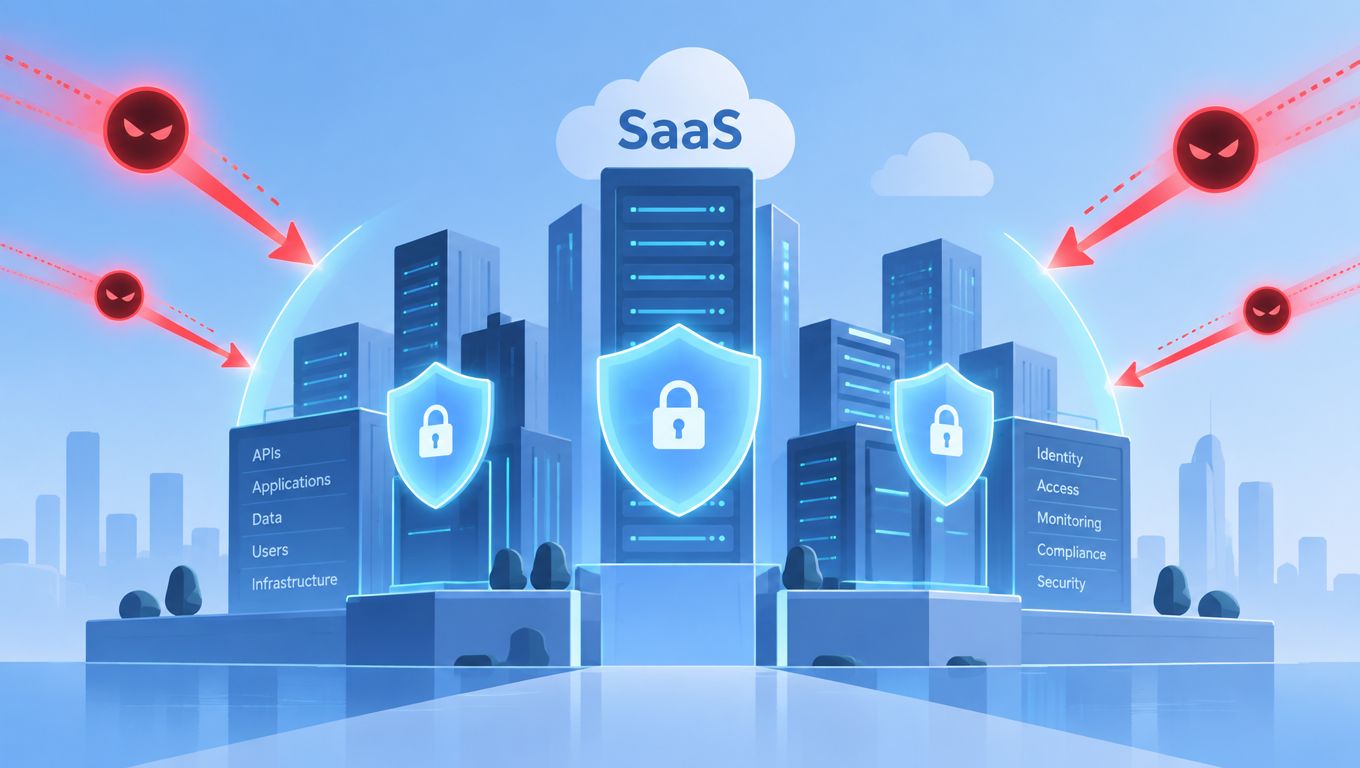
Those findings lead to concrete design decisions for a browser-based platform.
Design for identity compromise
Administrator access needs stronger protection than ordinary user access. Use phishing-resistant multifactor authentication for privileged users, support SSO and SAML with lifecycle-based provisioning, and remove access quickly when an employee leaves or changes role. Don’t issue broad, permanent permissions to integrations just because initial setup is easier.
Each connected service should have a separate service identity with narrowly scoped OAuth permissions. Store short-lived tokens in a managed secrets system. Monitor unusual API use, unexpected exports, and access patterns that don’t match the tenant, role, or environment. An access review should answer not only who can log in, but who can view recordings, change routing rules, modify privacy settings, export data, or alter retention policies.
Tenant isolation is equally important. A user who belongs to one customer account shouldn’t be able to discover another tenant through a browser request, an integration response, a shared cache, or an administrative workflow. Teams that need a more detailed treatment of this problem can consult this MSP identity visibility guide for relevant multi-tenant identity considerations.
Reduce the blast radius
Patching must cover more than the application server. The JavaScript delivery path, authentication components, exposed APIs, VPNs, and perimeter infrastructure all need defined service-level expectations, with emergency remediation for actively exploited vulnerabilities. Logs should be difficult to alter and detailed enough to reconstruct changes to integrations, exports, routing, and retention.
Third-party exposure deserves the same architectural attention. Verizon reported that third-party involvement doubled to 30% of breaches, extending risk to software providers, contractors, cloud services, and partners. Ransomware appeared in 44% of breaches, a 37% increase from the prior year, while the median ransom paid fell from $150,000 to $115,000. Those figures don’t predict the outcome of an individual incident, but they do show why vendor oversight, segmentation, recovery testing, and incident coordination belong in the product design.
A useful control is one that works during an ordinary Tuesday and during an emergency. If the team can’t revoke a token, isolate a tenant, identify affected records, or restore a known-good configuration under pressure, the policy isn’t operational yet.
The Role of AI in Sales Security
AI changes the compliance boundary because it combines data that teams often evaluate separately. A company identifier, visitor behavior, chat transcript, meeting metadata, CRM record, and inferred buying signal can collectively reveal information about an identifiable person or a commercially sensitive account.
That doesn’t mean every AI feature should be rejected. It means the feature needs the same governance expected of any production system that processes customer data. An AI assistant shouldn’t be treated as an informal browser extension just because a sales representative starts the interaction.
IBM reported that 13% of surveyed organizations experienced a breach involving AI models or applications, and 97% of those organizations lacked appropriate AI access controls in the associated 2025 AI breach findings. The control failure is more significant than the novelty of the technology. Teams are deploying models before they have decided which data may enter them, which users may invoke them, or what evidence must be retained.
Govern the complete AI data path
Start with an inventory of every AI deployment, including embedded vendor features, experiments, automations, and employee-selected tools. Classify prompts, transcripts, outputs, visitor attributes, and CRM fields. Block sensitive data from unapproved models, define retention and deletion rules, and log administrative and model interactions.
Access should be role-based or attribute-based. A sales development representative may need an AI summary of a conversation, while an administrator may need configuration access. Neither should automatically receive unrestricted access to every tenant’s transcripts or customer records.
Human review matters when an AI system routes a prospect, infers intent, assigns a qualification label, or triggers an escalation with commercial consequences. Explainability doesn’t require exposing proprietary model internals. It does require recording the relevant inputs, decision path, configuration, and human override.
IBM also reported that organizations with extensive use of AI and automation in security operations reduced breach costs by an average of $1.9 million and shortened the breach lifecycle by 80 days. Those outcomes support automation for detection and response, not blind automation of every customer-facing decision. Data minimization, encryption in transit and at rest, tenant isolation, key management, and auditable CRM synchronization still provide the foundation.
Teams evaluating an AI sales workflow can use this AI sales assistant guide to frame product questions around qualification, routing, conversation data, and human involvement rather than model novelty alone.
Making Compliance Operational
A certification can confirm that a control exists and operates within a defined scope. It can’t guarantee that a rushed employee won’t approve an excessive integration, that a product team won’t launch an undocumented data flow, or that an alert won’t disappear into an overloaded queue.
PwC’s 2025 Global Compliance Survey found that 77% of organizations were negatively affected to some or a great extent by compliance complexity, while only 7% considered themselves leaders in compliance. The same survey reported that 49% were already using technology for 11 or more compliance activities, and 59% had greater confidence in decisions when compliance activities were better coordinated.
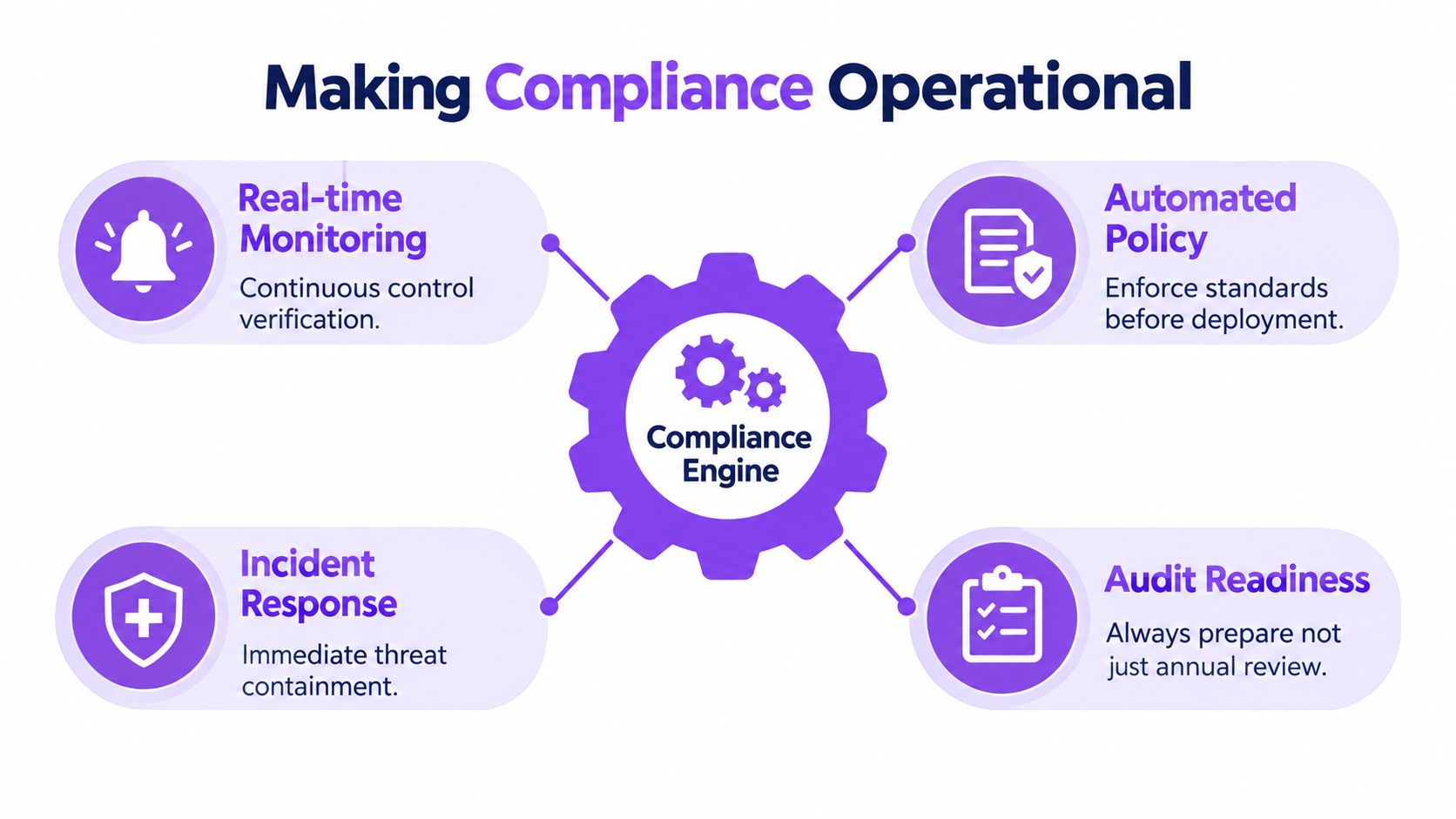
The lesson isn’t to buy more compliance software by default. Fragmented tooling can create duplicate alerts, conflicting evidence, and unclear ownership. A compliance engine should make the safe action easier inside the workflow where the decision occurs.
Put controls beside decisions
When a team creates an integration, the workflow should capture its purpose, permissions, owner, and review status. When an AI chatbot qualifies a visitor, the system should record the relevant configuration, consent or notice state where applicable, routing outcome, and human override. When a customer requests deletion, the organization should know which systems hold the associated transcript, recording, CRM activity, and derived signal.
A practical operating model connects controls to four activities:
- Real-time monitoring: Detect unusual authentication, export, API, and administrative behavior while someone can still contain it.
- Automated policy enforcement: Prevent deployment or access changes that violate approved conditions, instead of documenting the violation after the fact.
- Incident response: Give named responders the authority, contact paths, playbooks, and technical actions needed to contain a threat.
- Audit readiness: Preserve useful evidence continuously, with timestamps, owners, exceptions, and remediation history.
Enterprise teams also need to understand how security controls extend into business systems. A practical resource on security compliance for ERP systems is useful because it treats controls as part of operational software, not as a separate documentation layer.
For visitor intelligence specifically, a documented approach to identifying anonymous website visitors should address purpose, notice, data minimization, confidence, retention, and escalation. The objective isn’t to eliminate judgment. It’s to make judgment visible, reviewable, and consistent.
Building Trust with Automated Controls
Security controls work best when they are layered. Automation can enforce predictable rules at machine speed, while people handle ambiguity, exceptions, and high-impact decisions. Neither approach is sufficient alone.
Consider a live browser video conversation. The product needs secure session handling, authenticated access to relevant records, encryption in transit, clear recording behavior, and retention rules that match the customer’s policy. A transcript may support sales follow-up, but it shouldn’t automatically become available to every employee who can access the CRM.
AI chat creates a different trade-off. Always-on qualification improves coverage outside business hours, but it also increases the number of automated decisions and data paths that require governance. A useful implementation limits the model’s data access, records its routing action, escalates uncertain or sensitive situations, and gives authorized staff a way to correct the result.
Visitor identification adds another layer. Company details and behavioral signals can help prioritize account-based outreach, but the organization needs configurable privacy options and a clear explanation of what the system collects and why. A signal should guide a workflow, not silently become a permanent profile without review.
Compare controls by failure mode
| Capability | What automation handles | Where human oversight remains necessary |
|---|---|---|
| SSO and SAML | Centralized authentication and lifecycle-based provisioning | Exceptions, privileged access approval, and periodic access review |
| CRM synchronization | Consistent transfer of approved conversations, meetings, and intent records | Field mapping, retention decisions, and correction of inaccurate records |
| Data residency | Routing or storing data according to configured requirements | Contractual review, subprocessor assessment, and regional policy decisions |
| AI qualification | Initial classification, routing, and response | High-impact decisions, unusual requests, and disputed outcomes |
| Privacy controls | Configurable notices, collection limits, and retention behavior | Legal interpretation, rights requests, and policy exceptions |
A platform such as Captiwate combines in-browser video, chat, AI qualification, visitor identification, scheduling, co-browsing, and CRM or collaboration integrations. Its security and compliance information describes the enterprise controls associated with those workflows, including SOC 2 Type II and ISO 27001 certifications, GDPR and CCPA alignment, SSO and SAML, custom data residency, and configurable privacy options.
The implementation question is more important than the feature list. A single JavaScript snippet may simplify deployment, but the security team still needs to review what the snippet loads, what data it sends, how consent and privacy settings affect behavior, and how changes are tested. Native synchronization with HubSpot or Salesforce can improve continuity, but least-privilege permissions and field-level decisions still belong in the deployment plan.
Practical test: If a control can’t produce an owner, an event, an exception path, and evidence, it probably isn’t ready for production.
Automated controls should reduce repetitive mistakes, not conceal them. Teams need dashboards that show unresolved access exceptions, failed synchronization, unusual exports, model activity, and overdue remediation. That creates a usable operating signal instead of another repository that looks complete during an audit.
The Business Case for Security First
Security-first design protects more than customer data. It protects the sales process that depends on that data.
Enterprise buyers want a vendor that can explain identity controls, third-party access, AI processing, retention, incident response, and recovery without sending every question into a long internal escalation. A clear answer shortens procurement friction. Just as significantly, accurate answers force the vendor to understand its own architecture.
The strongest compliance programs connect certification evidence to daily behavior. They make privileged access difficult to misuse, integrations narrow by default, changes traceable, privacy settings configurable, and incident actions rehearsed. They also acknowledge trade-offs. More logging can create more sensitive data to protect. More alerts can produce fatigue. More automation can spread an incorrect decision faster. Good governance manages those costs rather than pretending they don’t exist.
Information security and compliance therefore become a product capability and a revenue capability. A buyer doesn’t need a perfect platform, but they do need confidence that the provider knows what it collects, where it moves, who can access it, and how the provider will respond when conditions change.
The practical standard is simple: build controls into the path from visitor interaction to CRM record, measure whether they work, and preserve evidence as the work happens. That is how compliance becomes operational instead of documentary.
Captiwate combines browser-based video, AI chat, visitor intelligence, scheduling, and CRM synchronization with enterprise security and privacy controls for B2B sales teams. Visit Captiwate to evaluate how its sales engagement workflows can fit your information security and compliance requirements.