A pricing-page visitor from a company on your target list lands on your site at 2:14 on a Tuesday afternoon. It’s their third visit this month, and they’ve already opened two case studies and a comparison page.
Route that visitor to one rep and the conversation opens with “what’s your budget?” The answer comes back vague, the lead gets tagged nurture, and the account goes quiet. Route the same visitor to another rep and the conversation opens with “looks like you’ve been comparing scheduling tools, what’s breaking down in your current process?” That rep books a call for Thursday morning. Same traffic, same intent, different outcome.
Inconsistent qualification doesn’t show up as bad leads. It shows up as demos that were never going to close, pipeline that stalls at the same stage every quarter, and two reps on the same team disagreeing about what “qualified” means. Franchise Foundry’s lead qualification guide makes the same case from the process side: criteria have to be shared before they can be measured. The eight signals below are the ones worth putting in front of any inbound team, each framed around what a rep can verify in a live website conversation or in the first CRM touch.
Table of Contents
- 1. Budget
- 2. Authority
- 3. Need
- 4. Timeline
- 5. Ideal Customer Profile Fit
- 6. Buying Intent and Behavioral Signals
- 7. Champion and Decision Process
- 8. Lead Scoring and Qualification Thresholds
- How Each Qualification Criterion Is Evaluated
- Turn Your Checklist Into Routing Rules Your Team Follows
1. Budget
Budget is the first thing most reps ask about and the last thing they should lead with. On a live website call, the useful question isn’t “do you have budget?” It’s “is this a funded initiative, or are we building the case for one?” Those are different leads with different next steps.
The BANT framework, which IBM developed in the 1960s so a large enterprise sales force could evaluate prospects consistently, treated budget as one of four observable dimensions alongside authority, need and timeline (Uplift Sales on the BANT framework). The value was never the acronym. It was that four subjective judgements became recordable facts a manager could compare across teams.
The useful part for a website conversation is the word “observable.” You’re not extracting a number. You’re placing the buyer into one of three states.
- Funded: a line item already exists, often under marketing tools, demand generation or sales operations. This lead can evaluate now.
- Unfunded but creatable: no allocation, but a named owner with a cost-of-inaction argument that finance would hear. This lead needs a business case, not a discount.
- Future-dated: budget resets in a specific month. Log the date, set the follow-up, don’t discard the record.
A rep I’d coach would ask the tier question rather than the number question: “are you looking at something in the low, mid or high tier for this?” It’s easier to answer and it still tells you whether the deal is real.
Record it, don’t infer it. A CRM field with three values beats a paragraph of notes every time.
For anonymous traffic, pair the budget question with what visitor identification already tells you about company size. A 40-person startup and a 4,000-person enterprise aren’t having the same budget conversation, and you can sequence the ask accordingly.
2. Authority
Authority is where most first conversations fail. A rep gets a friendly, detailed answer from someone who is interested yet cannot approve anything, then spends three weeks building a proposal for a person who was never in the room.
Ask a different question. “Who else will want a say before this gets signed?” gets you a map. “Are you the decision maker?” gets you a polite “I’d have to check with a few people” and nothing usable.
Say a marketing manager joins a live call from the pricing page. The rep learns the manager is evaluating tools for a five-person demand gen team, asks who signs off, and finds out the VP of Marketing approves anything above a set threshold. The rep books the VP for the same week and keeps the manager on the invite as the working contact. One question turned a single-threaded lead into three stakeholders.
- Log each role separately: economic buyer, technical or security reviewer, end user, procurement. One contact record holding all four is how handoffs lose context.
- Lean on the champion for the introduction: a warm internal forward from someone who wants the tool beats cold outreach to the VP every time.
- Use company context before the ask: knowing the account’s size and industry lets you guess the approval shape and test it out loud.
Working rule: if you can’t name the person who signs, the deal isn’t qualified, no matter how good the call felt.
3. Need
Need is the signal reps most often accept too early. “We’re looking to improve our lead response” is not a need. It’s a category. The need is the specific thing breaking, who it breaks for, and what it costs them each month.
The strongest need conversations sound like diagnosis. A visitor on a product page mentions their team handles inbound by email and sometimes takes three days to reply. The rep doesn’t jump to features. The rep asks what happens to those leads in the meantime, and the visitor says most of them go cold or sign with whoever called first. That’s a need with a cost attached, and the demo writes itself.

Three questions that surface a real need
- What’s slowing the current process down? Open-ended, no leading. Let them describe the mess in their own words.
- What does that cost you in a month? Hours, missed meetings, lost deals. Any unit works as long as they say it.
- What happens if this doesn’t change this year? The answer separates a priority from a nice-to-have.
Copy the prospect’s exact phrasing into the CRM. When you write the follow-up, use their words, not your product marketing’s. It reads like you listened, because you did.
One caution: need and enthusiasm look identical in the first five minutes. A visitor who says “this looks great” hasn’t told you anything. A visitor who says “we lose about a dozen booked meetings a month to no-shows” has.
4. Timeline
Timeline is the criterion that decides whether a lead enters a pipeline forecast or a nurture track, and reps get it wrong by accepting stated dates at face value. “Sometime in Q3” is a mood. A contract renewal on 1 October is a fact.
Ask what makes the date real. “What would need to be true for you to make a decision by then?” pushes the prospect from intention to mechanics, and mechanics are what you can forecast against.
Speed matters as much as the date itself. A Harvard Business Review study of 1.25 million sales leads, drawn from 29 business-to-consumer and 13 business-to-business companies, found that organizations attempting contact within one hour were nearly seven times more likely to qualify a lead than organizations waiting an additional hour. Compared with companies that waited 24 hours or longer, they were more than 60 times as likely to qualify. Qualification in that study meant a real conversation with a decision-maker, not a logged call attempt.
That reframes timeline as two fields, not one: when the buyer intends to decide, and when you first responded.
- Log the trigger event: renewal date, fiscal year end, product launch, funding round, contract expiration. Triggers predict timing better than opinions do.
- Separate near-term from nurture: a lead with a date eight months out shouldn’t sit in the same queue as one with a date this month.
- Automate the re-entry: set the reminder when the trigger is recorded, not when you remember.
A visitor who returns to your pricing page three times in a week is telling you the date is now. Offer a same-day call and find out.
5. Ideal Customer Profile Fit
Fit is the cheapest signal to check and the one that saves the most time, because you can often assess it before a single word is exchanged. Firmographics, the tool stack, the role, the geography: all of it narrows the pool before a rep spends a minute on discovery.
The trap is building an ICP from opinion. Build it from closed-won data. If mid-market SaaS companies already running HubSpot close faster and retain longer than everyone else, that’s your priority tier, and it should be visible to a rep the moment the visitor lands.
Say a team notices that visitors from mid-market SaaS accounts convert at several times the rate of everyone else. Those visitors get routed to live video. Everyone else gets AI chat and a nurture sequence. Same website, different treatment, decided by fit rather than by whoever happens to be free.

What belongs in the fit record
- Positive criteria: industry, headcount band, revenue range, region, existing tooling, the role that owns the problem.
- Negative criteria: the segments you’ve learned to decline. Write them down, or reps will keep re-qualifying the same bad fits.
- Tier assignment: a simple A, B, C tier that drives routing and outreach cadence in one glance.
Review the profile every quarter against win and loss data. ICPs drift as your product moves upmarket. For a fuller walkthrough of how to define one, see what an ideal customer profile actually looks like and how it changes routing decisions.
6. Buying Intent and Behavioral Signals
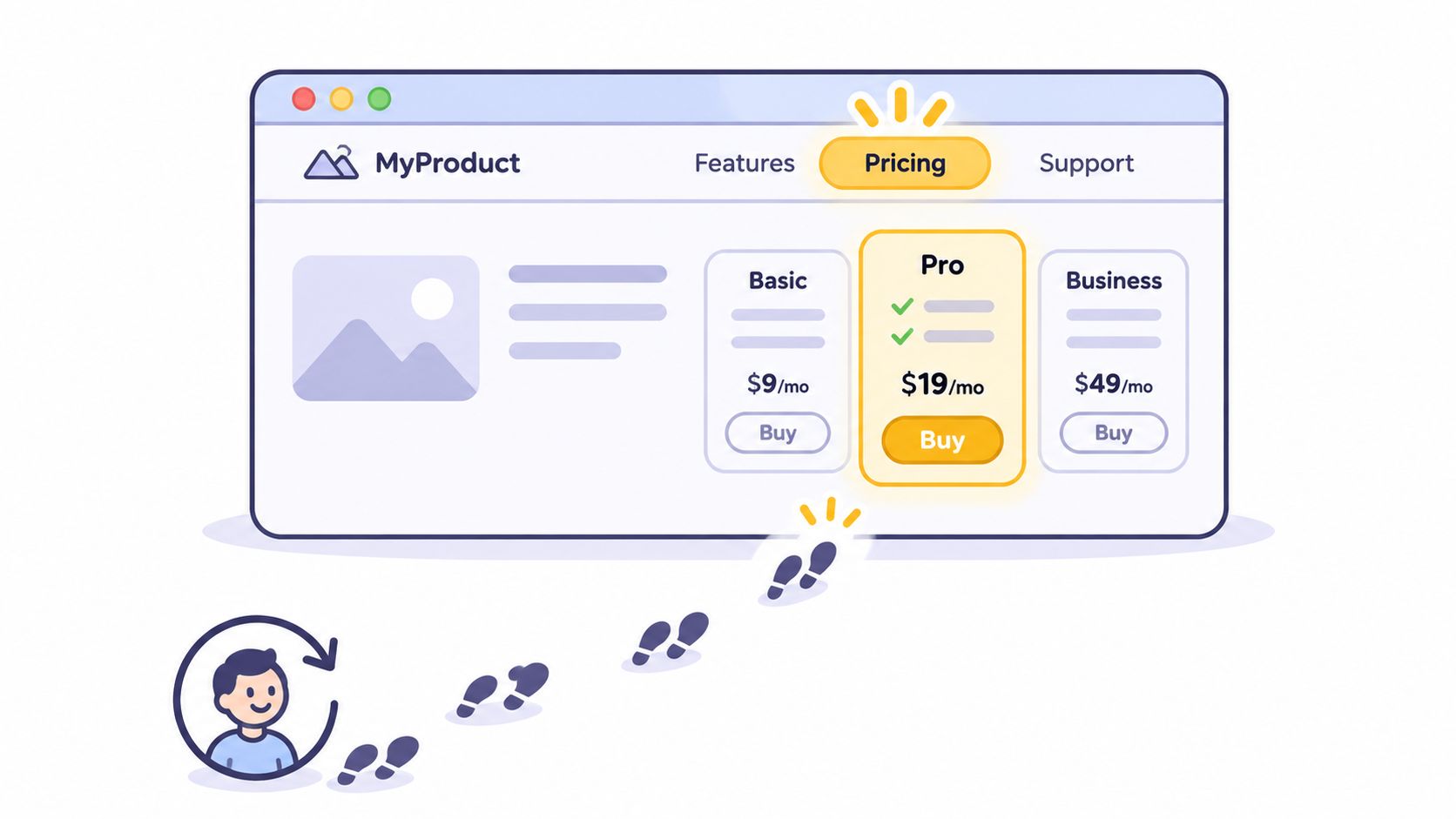
It’s common to treat behavioral intent as automatically positive. A pricing-page visit gets a lead marked hot. A download gets a call. Then half those leads turn out to be competitors, students, or someone doing research for a project that dies in a fortnight.
Signals need governance before they need celebration. A predictive model needs six to twelve months of a company’s own outcome data before scores become reliably accurate, according to LeadTruffle’s guide to qualifying quality prospects, and quality depends on clean CRM outcomes and representative labels rather than on the algorithm alone. Until you have that history, treat behavioral signals as questions, not answers.
Four rules that keep intent signals honest
- Set a recency window. A pricing visit from this morning and one from six weeks ago are not the same lead, and your routing shouldn’t treat them the same.
- Separate research from purchase. Someone reading an integration doc is checking feasibility. Someone comparing two pricing tiers has a decision in front of them.
- Cap repeat activity. One visitor refreshing a page ten times shouldn’t outscore ten visitors from ten target accounts.
- Audit by segment. Compare conversion rates by source, device, geography and company size. A signal that only converts for one segment is a segment signal, not a universal one.
A worked example. A visitor from a target account views the pricing page and the integration documentation twice in one afternoon. That pattern, combined with a fit match and a repeat session, justifies a live video invite while they’re still on the site. A single homepage visit at 11pm justifies a retargeting ad, not a rep’s afternoon.
For a deeper look at which behaviors are worth acting on, read what buying signals are worth acting on before you build your trigger rules.
7. Champion and Decision Process
Champion and process is the MEDDIC layer, and it’s the criterion that separates deals that close from deals that stall in legal for nine weeks. MEDDIC stands for Metrics, Economic buyer, Decision criteria, Decision process, Identify pain and Champion. What matters for an inbound lead is the last two letters of the practical question: is there someone inside who wants this to succeed, and do you know the steps between yes and signed.
The reason this deserves its own slot is that buying decisions rarely happen in a single conversation. One summary of the 2025 6sense Buyer Experience Report notes that buying groups typically rank their shortlist before contacting vendors, and select their pre-contact favorite in roughly 77% of cases (Martal’s breakdown of buying-group behaviour). That changes what a “weak” first call means. An influencer or researcher on the phone doesn’t necessarily signal a weak lead. The account may already have a favorite, and your contact may be the person who has to justify it internally.
So qualify the account and the committee, not just the contact.
- Name a champion: who inside has been pushing for a fix, and what do they personally gain from it landing?
- Map the steps: who reviews security, who touches procurement, who signs, in what order.
- Test the criteria: what does your product have to prove for the committee to pick you over the incumbent?
If no one inside would be disappointed by a “no”, you’re not in a deal yet. You’re in a research project someone else is running.
8. Lead Scoring and Qualification Thresholds
A score is only useful if it changes behaviour. Too many teams build a scoring model, wire it to a dashboard, and then let reps work the same queue they worked before. The score becomes decoration.
Build the model with sales in the room and validate it against closed-won and closed-lost records. Benchmark reporting collected in an AI lead-scoring research review puts mature predictive models trained on at least 12 months of outcome data at roughly 80% to 85% predictive accuracy, against about 48% to 54% for traditional rule-based approaches, with the caveat that definitions of accuracy vary and performance drops when data is sparse or CRM hygiene is poor. Treat those numbers as direction, not a promise.
Define what happens at each threshold
- Above the top threshold: route to a named rep, trigger an immediate in-browser invite or call, and start the response clock.
- Middle band: AI chat plus a nurture sequence, with a re-score on the next high-intent visit.
- Below the line: marketing nurture only. Don’t burn rep hours on it.
Keep the criteria simple at first. Fit plus a handful of intent signals will outperform a fifteen-variable model built on two months of data. Review weights quarterly and compare the leads that scored high but never converted against the ones that did.
Earlier on this site there’s a useful contrast between marketing qualified leads and sales-accepted ones, which is the handoff where most scoring systems fall apart. For a wider comparison of frameworks before you commit to one, B2B lead qualification frameworks covers the alternatives to BANT.
How Each Qualification Criterion Is Evaluated
| Item | Framework Origin | Core Question | Best Evidence Source | Typical Owner |
|---|---|---|---|---|
| Budget | IBM BANT | Is funding available, and when? | Approved budget, funded initiative, or budget owner confirmation | Sales representative |
| Authority | IBM BANT; PTC MEDDIC | Who can approve or influence the purchase? | Stakeholder map and decision-maker confirmation | Sales representative |
| Need (Pain and Business Problem) | IBM BANT; Neil Rackham SPIN Selling | Is there a significant problem the solution can address? | Prospect-stated pain and its business impact | Sales representative |
| Timeline | IBM BANT | When does the prospect need to decide and implement? | Decision date, implementation date, or triggering event | Sales representative |
| Ideal Customer Profile (ICP) Fit | ABM practitioners, including ITSMA; Sangram Vajre | Does the lead match successful customer profiles? | Firmographic, technographic, and role data | Marketing and sales operations |
| Buying Intent and Behavioral Signals | Forrester Research; Gartner | Do observed behaviors indicate active buying interest? | Recent visits to high-intent pages and account-level engagement | Marketing operations |
| Champion and Decision Process (MEDDIC Elements) | Jack Napoli and Dick Dunkel at PTC; later popularized by Andy Dunn | Is there an internal advocate and a clear buying process? | Champion confirmation, decision criteria, and mapped approval steps | Account executive |
| Lead Scoring and Qualification Thresholds | HubSpot; Marketo | Does the lead meet the criteria for sales follow-up? | Combined fit and engagement data validated against outcomes | Marketing operations with sales input |
Turn Your Checklist Into Routing Rules Your Team Follows
A checklist that lives in a document changes nothing. The rollout that works is short and unglamorous.
Start with a single working session. Sales and marketing agree on the eight criteria, in writing, with the exact field each one maps to in the CRM. Argue about the definitions in that room, not in a deal review three weeks later. “Funded” and “future-dated” need to mean the same thing to a rep in Dublin and a rep in Denver.
Then score real leads. Pull the last fifty inbound leads, the ones with known outcomes, and grade them against the eight criteria as a group. You’ll find two things fast. Some leads that closed looked badly qualified on paper, usually because the checklist missed a signal that mattered, like three visits from the same account in a week. And some leads that scored beautifully never moved, usually because nobody checked for a champion.
That exercise gives you thresholds you can defend. Set them plainly: what score triggers a live call, what score triggers a chat, what score goes to nurture, and who owns the escalation when a high-intent lead sits untouched past the response window. Write the escalation owner’s name, not a team alias.
Then watch the first touch, not the pipeline report. If a lead from a target account lands on pricing at 2:14 and no human or AI has spoken to them by 2:20, the rules aren’t working, regardless of what the dashboard says. A walkthrough built around your own website, using your own traffic, is the fastest way to see which of those moments you’re currently missing and where a live in-browser conversation would have caught the visitor while they were still deciding.
The last piece is review. Once a quarter, take the leads that scored high and didn’t convert, and the ones that scored low but closed, and adjust. That feedback loop is what separates a scoring system from a scoring decoration.
Captiwate turns the checklist into something that runs on real traffic instead of in a shared doc. Visitors are identified and scored by company fit and page behavior, high-intent sessions on pricing or product pages trigger an in-browser video call or a 24/7 AI chat, and every conversation syncs back to your CRM with meetings booked and reminders sent. If you want to see what your own traffic looks like when qualification happens in the moment, visit Captiwate.