Most B2B demand generation advice is backwards. Teams keep pouring money into more traffic, more gated content, and more top-of-funnel noise, then act surprised when pipeline stays flat because nobody fixed the handoff. The bottleneck in 2026 is not awareness, it’s speed, routing, and live conversion.
If you want blunt truth, here it is. A market summary projects $69.3B in B2B demand gen spending in 2024, and another estimate puts the global demand generation software market at USD 4,486.39 million in 2022 with a projected rise to USD 8,350.8 million by 2028 at a 10.91% CAGR (industry summary). That level of investment doesn’t excuse sloppy execution. It proves the category is big enough that the teams who win are the ones who stop buying more leads and start fixing how leads turn into revenue.
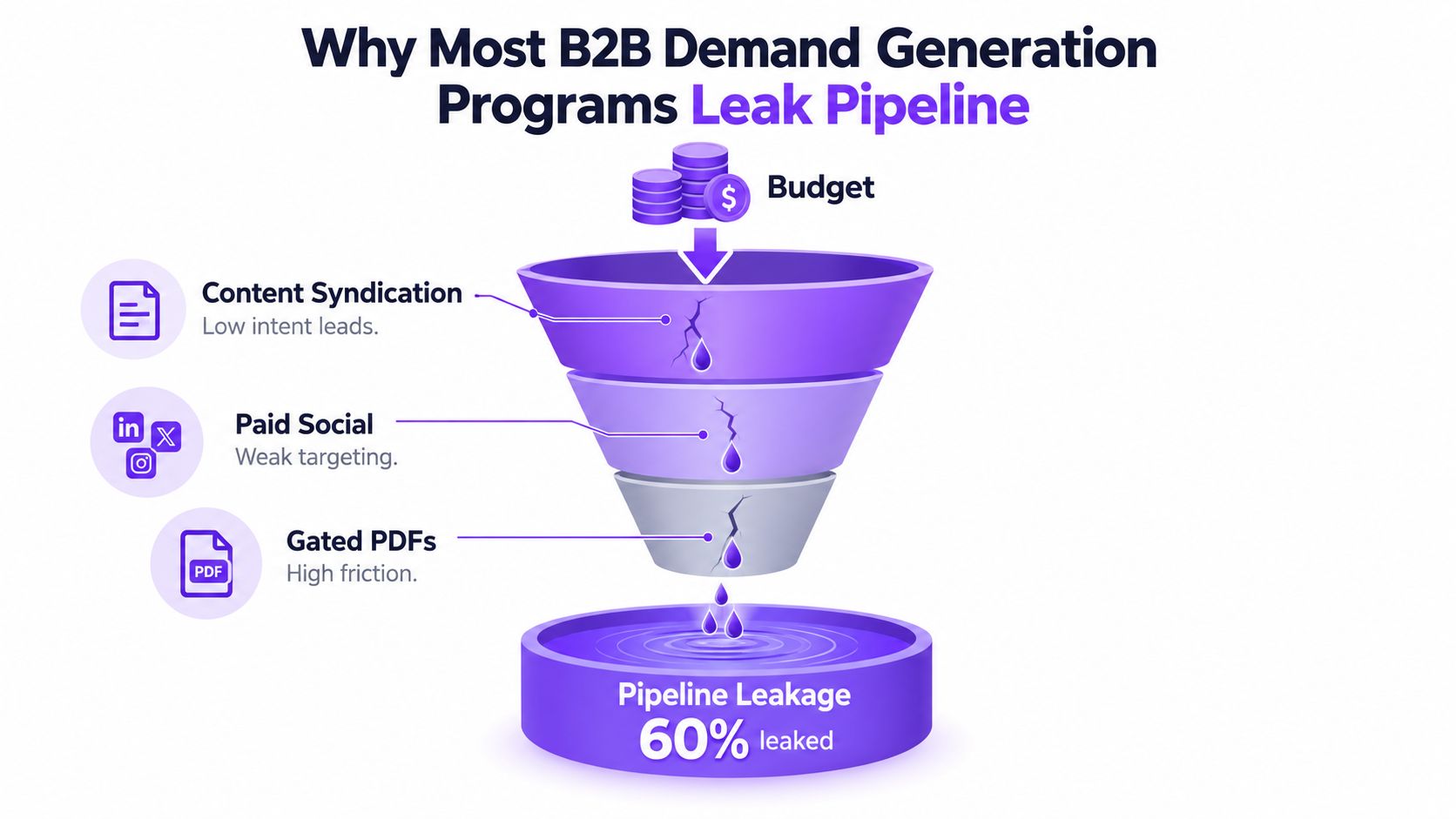
Table of Contents
- Why Most B2B Demand Generation Programs Leak Pipeline
- What B2B Demand Generation Actually Is in 2026
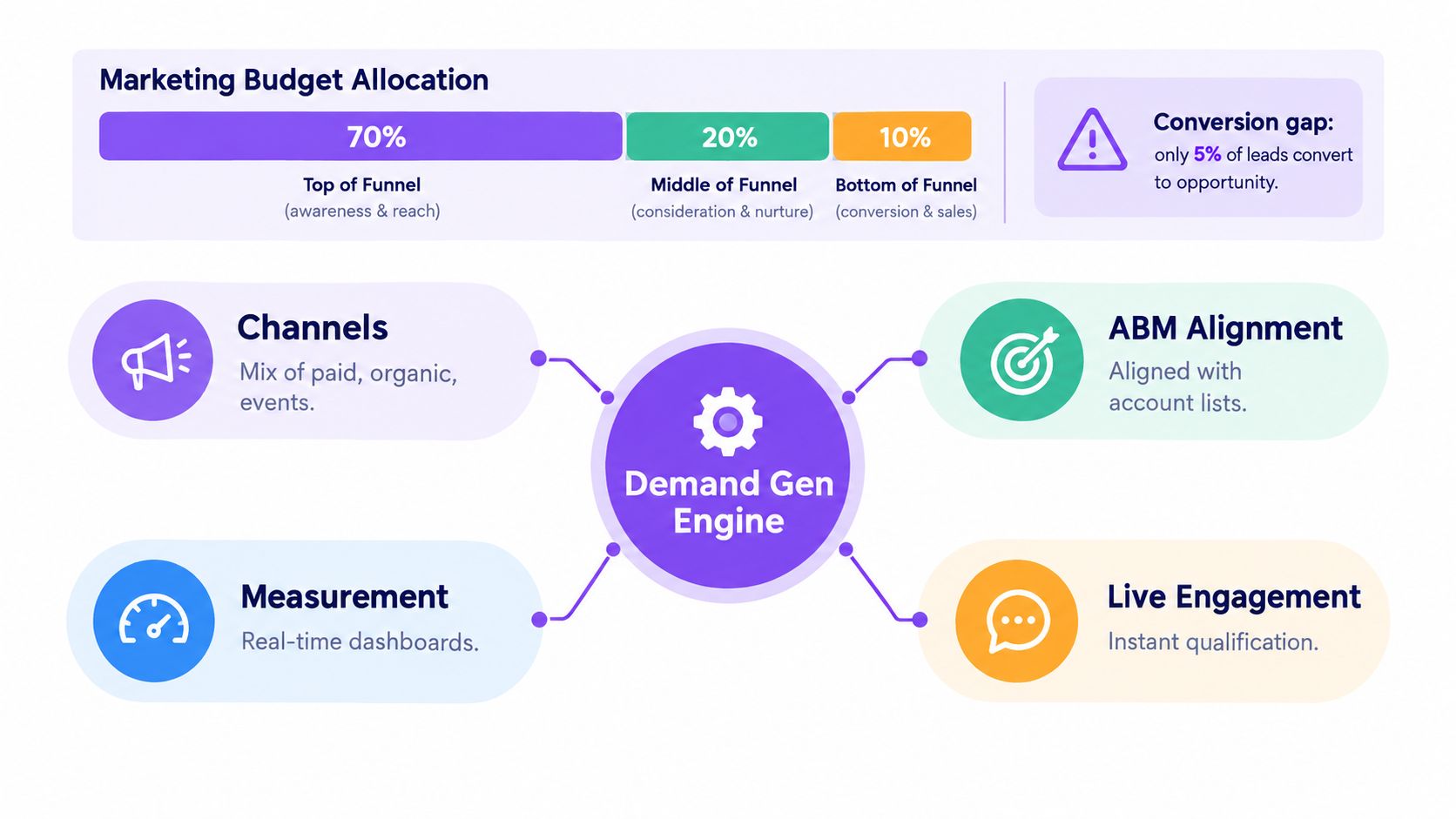
- The Four Pillars of a Modern Demand Gen Engine
- Channels Ranked by Sales-Ready Intent
- Aligning ABM and PLG With Your Demand Gen Motion
- Measurement That Actually Predicts Revenue
- Where Live Engagement and AI Close the Speed Gap
Why Most B2B Demand Generation Programs Leak Pipeline
Pipeline leakage traces back to broken conversion mechanics rather than lack of market interest. Teams keep buying content syndication, paid social, and gated downloads, then let form fills sit in queues while buyers move on, compare vendors, or book with whoever responds first.
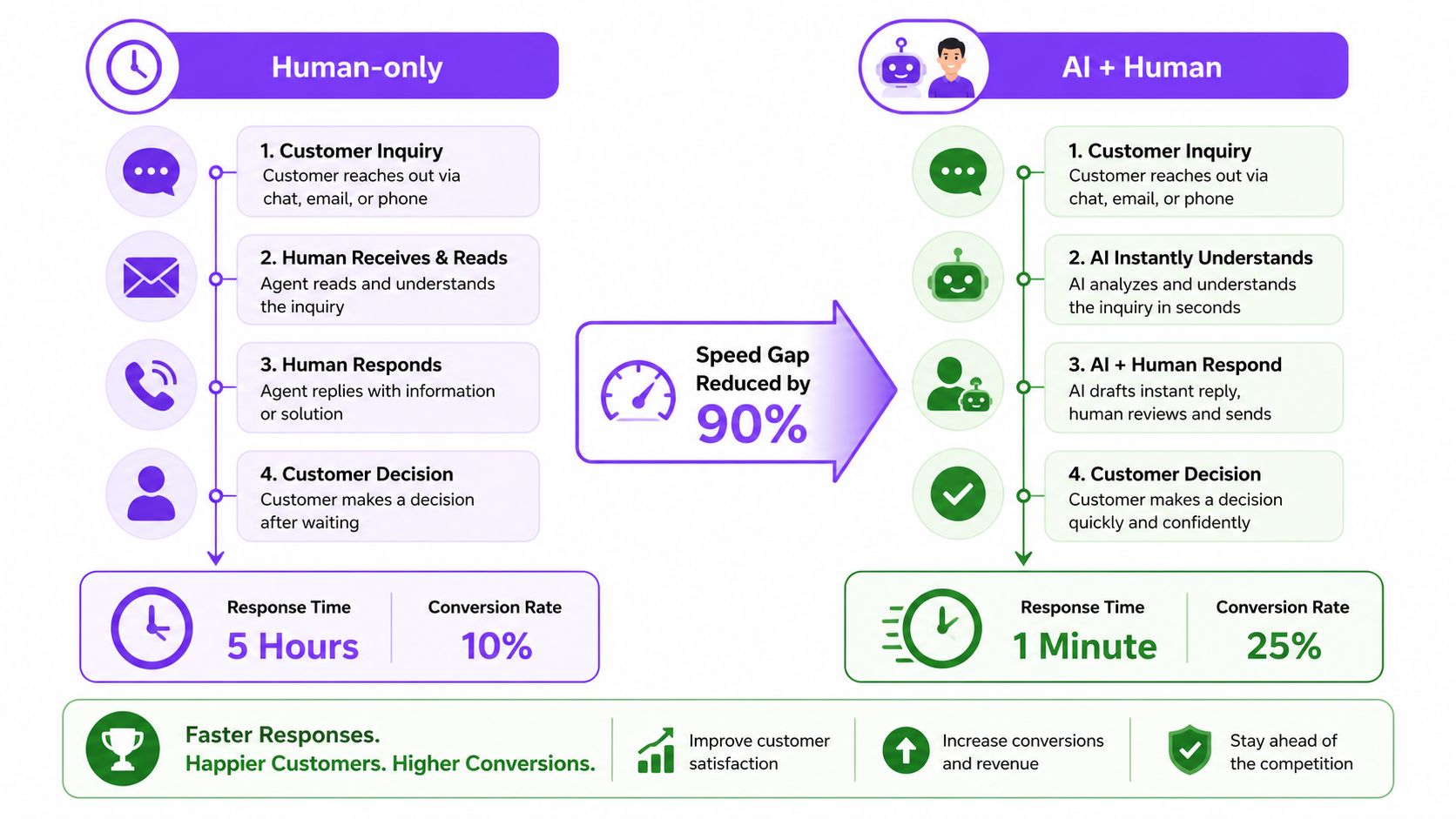
Speed is the part most dashboards flatten. One benchmark synthesis says only about 7% of teams reply within five minutes, while under-five-minute responders see roughly 21% lead-to-opportunity conversion versus about 2.3% for next-day replies (Plura AI benchmark). Another summary says leads contacted within five minutes convert 8x more often than those contacted later (GrowthCentrum lead stats). If routing is slow, intent is already leaking out of the funnel.
The leak is a handoff problem
The break usually starts after the form submission. SDRs chase accounts with weak routing logic, pricing-page visitors get generic nurture, and demo requests sit in a queue long enough to cool off. That is an operations failure, not a demand failure.
Practical rule: if a buyer shows high intent and no one can respond in minutes, your funnel is already broken.
Smart teams stop thinking in campaign terms and start thinking in handoff terms. They look for where routing breaks, where response stalls, and where live engagement is missing. Fix those mechanics first, then scale spend.
What B2B Demand Generation Actually Is in 2026
B2B demand generation is a revenue system, not a content calendar. It owns the path from anonymous interest to qualified pipeline, which means it has to cover demand creation, demand capture, qualification, and acceleration. If your program only ships content and hands off names, that’s lead gen with a nicer name.
The distinction matters because lead gen captures contact information after intent appears, while demand gen shapes the buying journey before and after that moment. Buyers don’t move in neat stages anymore, and the old assumption that a white paper download equals readiness is weak at best. Demand gen has to do more than attract attention, it has to convert signal.
What you should actually own
Run this audit on your current program:
- Demand creation: Are you building awareness and preference in the market, or just chasing active buyers?
- Demand capture: Do you have live touchpoints, forms, chat, and booking paths that catch intent quickly?
- Demand qualification: Are behavioral signals, intent data, and routing rules connected to a real SLA?
- Demand acceleration: Do ABM tiers, product signals, and sales motions move hot accounts forward without manual drag?
If you don’t own the handoff, you don’t own demand generation. You own traffic.
A useful way to think about the modern stack is to separate signal generation from signal response. Intent data helps identify what buyers are doing, but that only matters if routing and ownership happen fast. For a deeper operational view of that layer, the intent-data framework at Captiwate’s intent data overview is worth reading because it aligns with the practical question everyone keeps avoiding, who responds first, and how.
The clearest difference between strong and weak programs is ownership. Weak programs optimize for volume. Strong programs own the entire lifecycle, from anonymous browsing to booked conversation.
The Four Pillars of a Modern Demand Gen Engine
Most programs overspend on channels and underinvest in the routing layer where revenue converts. That’s the trap. You can buy more reach forever and still lose deals if the buyer waits hours for a response.
Channels create signal, not revenue
Channels still matter, but only because they create qualified attention. SEO, paid, events, communities, and webinars all have a job, they surface intent or build it. They’re not the finish line. If the channel doesn’t create a useful signal, it’s just an expense line.
ABM alignment concentrates effort
ABM exists to make sure your best attention goes to the accounts that matter. A good account list doesn’t just shrink waste, it changes the kind of follow-up you can do. If Tier 1 accounts get the same treatment as everyone else, your ABM program is just segmentation with a costume on.
Measurement exposes friction
Measurement should tell you where conversion is falling apart, not give marketing a report card for activity. Teams need visibility into lead response, qualification, stage progression, and account engagement. The point isn’t to admire dashboards, it’s to find the bottleneck and remove it.
Live engagement closes the loop
This is the layer many still ignore. The speed gap is huge, and the penalty hits hard once a prospect cools. If buyers are on high-intent pages and nobody is available for a live conversation, your system is leaking money by design.
If you want a strong external reference for the broader operating model, how to build a growth marketing engine is a useful companion piece because it treats growth as a system, not a series of disconnected campaigns. The same logic applies here. Signal comes in, ABM tiers prioritize it, measurement diagnoses the friction, and live engagement closes the loop.
A demand gen engine that can’t respond in real time isn’t an engine. It’s a queue.
Channels Ranked by Sales-Ready Intent
Forget raw reach. The channels that matter most are the ones that either surface buyers already in motion or create enough context for a rep to act quickly. The rest belong in nurture, not in your hope strategy.
High-intent search, pricing-page traffic, and comparison behavior should get routed immediately. Broader channels like communities, webinars, and organic content can still work, but they usually need scoring, nurture, or a second signal before sales steps in. If you try to treat every channel like a demo request, you’ll waste rep time and miss the opportunities.
| Channel | Intent Quality (1-5) | Sales-Readiness (1-5) | Recommended Budget Weight |
|---|---|---|---|
| Pricing-page search and competitor search | 5 | 5 | Intent capture |
| SEO for high-intent queries | 5 | 4 | Intent capture |
| PLG signups and trial behavior | 4 | 5 | Intent capture |
| Third-party events | 4 | 4 | Nurture with intent scoring |
| Webinars | 3 | 3 | Nurture with intent scoring |
| Communities | 3 | 2 | Brand and nurture |
| Paid social | 2 | 2 | Brand and experimental |
| Content syndication | 2 | 1 | Experimental only |
Where most budgets are upside down
Too many teams overweight channels that look efficient on paper and underfund the ones that move meetings. Broad social and generic display often need long nurture paths before sales should touch them. That’s fine if you plan for it. It’s a disaster if you expect them to close like a demo request.
A better default mix in 2026 is 30% intent-capture channels, 40% nurture with intent scoring, 20% brand, 10% experimental. That beats the old 70/20/10 reflex because it puts more weight on the two things that matter most, buying signal and response speed. It also stops you from pretending every channel should behave the same way.
Rule of thumb: if a channel can’t justify a fast human response or a strong nurture path, it doesn’t deserve top budget.
Aligning ABM and PLG With Your Demand Gen Motion
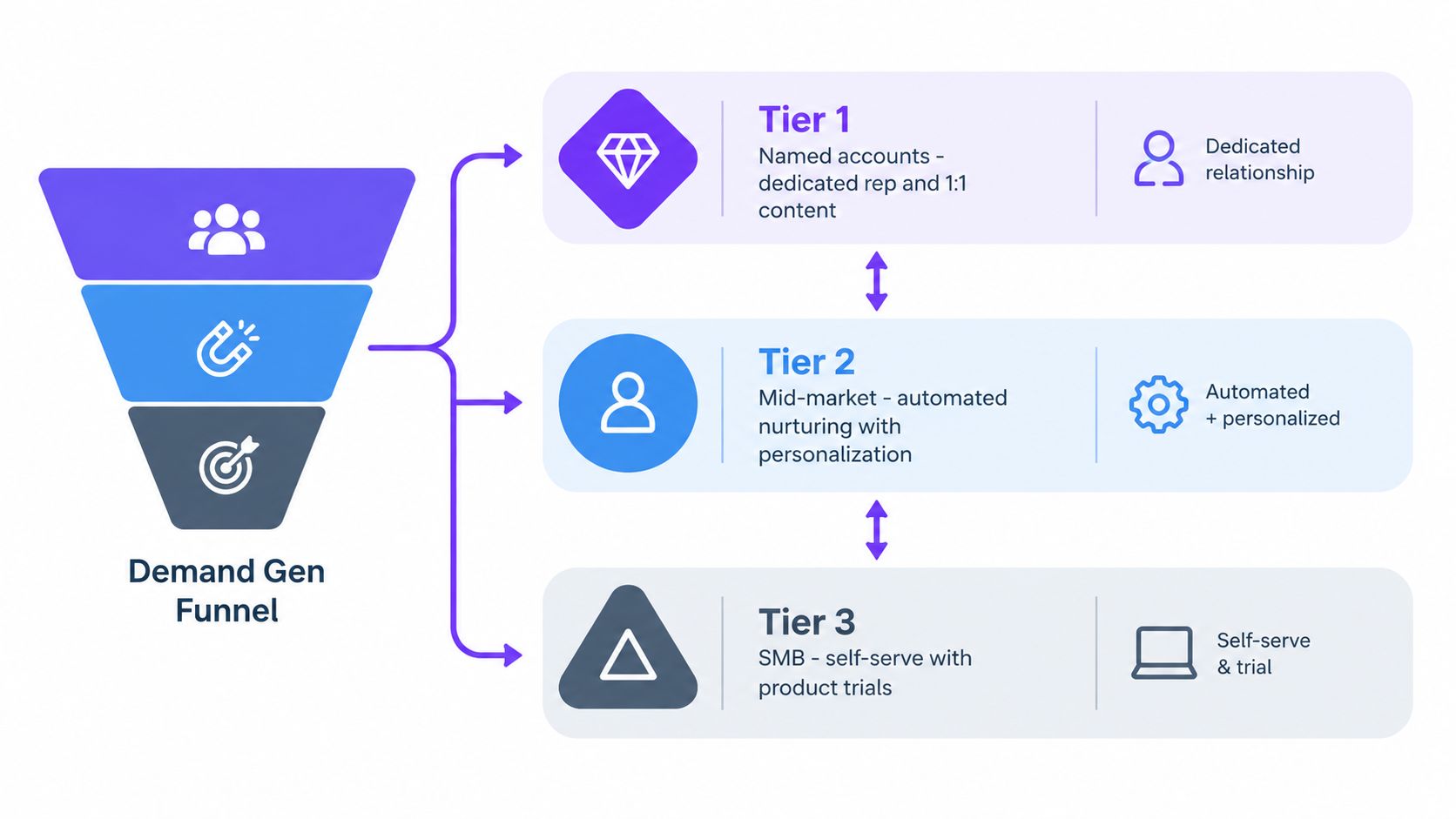
ABM and PLG aren’t separate motions bolted onto demand gen. They’re routing layers inside the same system. ABM handles depth, PLG handles breadth, and both need the same brain behind them or the handoff gets messy.
The cleanest setup is tiered. Tier 1 accounts get named-rep routing and 1:1 content. Tier 2 gets industry-specific plays. Tier 3 runs self-serve with product-led triggers and lighter human coverage. That’s not theoretical, it’s the only way to keep high-value accounts from getting treated like anonymous traffic.
A worked routing example
A target account visits the pricing page twice, opens two competitor comparison docs, and creates a free trial workspace. The first trigger should route that visit to live chat within 60 seconds. The second should alert the assigned AE and SDR with the account context attached. The third should enroll the trial user in a PQL sequence that escalates to a guided demo once usage hits the right threshold.
That’s what good orchestration looks like. Each trigger has a channel, an SLA, and an owner. There’s no mystery and no waiting around for someone to “circle back.”
Why PLG and ABM need one routing brain
PLG gives you product behavior. ABM gives you account context. Together, they tell you not just who is active, but who is worth deeper human attention. Without one routing layer, you get duplicate outreach, missed signals, and slow follow-up that makes your team look asleep.
For teams still sorting out the overlap between account motions and sales motions, account-based selling is a useful internal read because it lines up the sales side of the same problem. The goal isn’t more touches. It’s the right touch, from the right person, at the right moment.
Measurement That Actually Predicts Revenue
Many teams still report MQLs, traffic, and open rates because those numbers are easy to pull. They are also poor signals if you want to know whether demand gen is creating pipeline. In 2026, the question is simple, are buyers moving toward revenue, or just moving through the funnel?
The four metrics that matter
Speed-to-lead measures the minutes between a form fill or other high-intent action and the first live human touch. The benchmark that matters is under 5 minutes for high-intent actions and under 30 minutes for mid-intent actions, because delay kills contact rates. This metric shows whether staffing and routing are built for real-time response.
MQL-to-meeting rate shows how many qualified leads turn into conversations. In practice, this should sit in the 35-50% range depending on ICP strictness, though teams often learn their scoring is too loose or their follow-up is too slow. The lever here is qualification quality, not more lead volume.
Pipeline velocity uses the familiar formula, number of opportunities times average deal size times win rate, divided by sales cycle length. It shows where deals get stuck and which sources move faster. If you only track creation, you miss slippage.
Account engagement score is the composite view that blends intent signals, content depth, and product usage. It tells you which accounts deserve deeper attention now. The lever is tiering, play selection, and how quickly humans get involved.
| Metric | Formula | 2026 Benchmark | What It Tells You |
|---|---|---|---|
| Speed-to-lead | Minutes from intent to first live touch | Under 5 minutes for high-intent, under 30 for mid-intent | Whether routing and staffing are built for real-time response |
| MQL-to-meeting rate | Meetings divided by qualified leads | 35-50% depending on ICP strictness | Whether scoring and qualification are aligned with sales reality |
| Pipeline velocity | Opportunities x deal size x win rate, divided by sales cycle length | No single benchmark, track by segment and source | Where deals slow down and which sources move faster |
| Account engagement score | Composite of intent, content depth, and product usage | No universal benchmark, use it comparatively | Which accounts deserve deeper plays and immediate handoff |
Retire the vanity dashboard
Raw traffic, social followers, MQL volume, and email open rates should stop being the headline numbers. They can still exist, but they cannot be the scorecard. If your weekly meeting starts with those metrics, you are managing motion, not revenue.
A tighter operating cadence works better. Monday is for pipeline review. Wednesday is for channel optimization. Monthly is for account engagement audit. That rhythm forces the team to connect activity to pipeline instead of admiring the middle of the funnel.
Where Live Engagement and AI Close the Speed Gap
The biggest conversion gap in modern B2B demand gen isn’t awareness. It’s the gap between a buyer’s action and a live conversation. Pricing-page visits, comparison clicks, and demo requests lose value fast when the first reply comes hours later, not minutes.
Let AI do the first layer of work
AI should handle qualification, intent scoring, FAQ resolution, and meeting routing. That keeps a human from having to babysit every visitor just to discover whether they’re a fit. The point isn’t to replace reps, it’s to get them in front of the right people faster.
Human reps should step in where judgment matters. Pricing negotiation, security review, and executive buying-committee conversations still need people. So does any situation where the buyer wants nuance, reassurance, or a real back-and-forth.
Use live engagement as the operating core
Live chat, in-browser video, and automated booking can turn anonymous traffic into booked meetings without making the buyer wait for an email chain. That’s especially important off-hours, when good intent often goes unhandled. The tool layer matters only if it’s tied to routing, CRM sync, and ownership.
Captiwate is one option in that category. It identifies visitors, qualifies traffic, and connects high-intent prospects to live sales conversations through in-browser video, chat, and AI, which makes it relevant for teams trying to shrink the response gap rather than just collect more form fills.
For teams exploring the broader conversational layer, what is conversational marketing gives a clean conceptual frame because it matches what buyers now expect, fast answers and low-friction handoff. The actual outcome you want is simple, less waiting, more booked conversations, and less leakage between interest and revenue.
If you want to stop losing buyers in the handoff, Captiwate is built to identify high-intent visitors, engage them in real time, and route them into conversations without forcing them through a slow form-and-wait process. Visit Captiwate if you’re ready to rebuild demand generation around live engagement, faster routing, and fewer leaked opportunities.